Refugee Leadership: Tools, Challenges, and the Path Forward
Introduction
In today’s shifting political landscape where global powers are increasingly retreating from long standing humanitarian commitments via widespread aid cuts and undermining asylum and refugee protections, the role of local leaders, especially those with refugee backgrounds, has never been more critical in global refugee governance. As international priorities shift, local leaders remain on the ground, steadfastly working with and for their communities. Additionally, in an era of limited funding, locally driven initiatives have repeatedly proven to be both effective and cost-efficient. As a result, refugee leadership must become more central to how the world responds to global displacement challenges and the shape of whatever comes next. To meet this moment, support for refugee leadership is an urgent necessity, and meaningful refugee participation is essential.
For nearly a decade, refugee leaders, experts, and refugee-led organizations (RLOs) have been at the forefront of advocating for meaningful participation in the global decision-making processes that shape their lives. Meaningful refugee participation can be broadly understood as the active involvement of refugees at all levels of advocacy and policy making, ensuring that their voices are not only heard but also directly shape policies and outcomes. While important progress has been made, refugee participation often remains limited, sometimes tokenistic, or confined to consultation with limited influence on policy and outcomes. At the same time, there is growing recognition that refugees must be more than participants; they must be partners with sustained influence in setting agendas and shaping decisions.
This paper examines the primary tools and approaches to advance refugee participation that have emerged over the past several years including refugee-led organizations, refugee advisory boards, participation in key policy forums, independent refugee-led platforms like R-Space (a newly convened refugee-led initiative), and efforts to place refugees in leadership positions within organizations. The paper reflects the analysis of the author and is based on a number of interviews conducted with diverse stakeholders including: refugee leaders and experts, and representatives of NGOs and philantrophic donors. The paper does not offer a deep analysis of existing tools and mechanisms but rather takes stock of where the refugee leadership movement stands today in its efforts to advance meaningful participation. By assessing the strengths and limitations of tools the movement has used, this stocktaking aims to inform a broader conversation about what is working, where gaps remain, and how to strengthen refugee participation moving forward.
Refugee-Led Organizations (RLOs)
A refugee-led organization (RLO), as defined by the UN Refugee Agency (UNHCR), is “an organization or group in which persons with direct lived experience of forced displacement play a primary leadership role and whose stated objectives and activities are focused on responding to the needs of refugees and/or related communities.”
Over the past several years, the number of RLOs has grown significantly worldwide, which might reflect an increasing recognition of the role refugees play as key stakeholders in the refugee regime. RLOs take different forms, including community-based RLOs, policy and advocacy RLOs, umbrella or network RLOs, social enterprise RLOs, and faith-based RLOs. One of the main strengths of all RLOs is their close proximity to impacted communities. RLOs often maintain direct contact with their communities and have a clear understanding of their cultural, social, and economic contexts, fostering trust and effective communication. While the number of RLOs have increased in recent years, not every RLO will succeed—some struggle because of resource constraints and the scale of resourcing needed to really build and sustain an organization.
Like any other civil society initiative trying to formalize and establish itself, RLOs face challenges that affect their ability to institutionalize and remain sustainable. At the same time, they deal with a distinct set of obstacles: difficulties with legal registration, funding restrictions since donors often perceive them as high risk, political sensitivity and marginalization as some host countries view them with suspicion, and capacity gaps that come with displacement, such as limited access to higher education and work permits.
While all RLOs generally share the goal of advancing refugee rights, they operate in vastly different contexts with distinct challenges and opportunities. Those that operate in the first country of asylum in the global south usually tend to focus on providing direct services to refugee and host communities, with some exceptions, such as in Latin America, where they might also engage in advocacy. They are often deeply engaged in addressing the immediate, day-to-day needs of their communities, from providing essential services to responding to emergencies. This constant focus on service delivery can leave little time, energy, or resources for engaging in broader advocacy efforts or policy discussions. Additionally, the political environment in such host countries can further restrict RLOs’ ability to engage in advocacy. Adding insult to injury, host governments may impose legal or bureaucratic hurdles that make it difficult to operate officially and discourage refugee involvement in policy venues, or may even retaliate against organizations perceived as challenging state policies. This makes it difficult for these RLOs to influence national or international policy, even when they desire to do so, thus hindering their meaningful participation efforts.
Those operating in the global north (whether as the first country of asylum or resettlement), have a better chance of extending their mandate beyond service delivery to policy and advocacy. They often operate in a different reality, typically based in countries where refugees have been resettled, such as the United States, Canada, and the European Union. Because the basic needs of their communities are largely met, global north RLOs have more opportunities to engage in advocacy, policy discussions, and capacity-building efforts. They often benefit from greater freedom of movement, freedom of speech, and direct access to policymakers, allowing them to play a role advocating to push for meaningful refugee participation to shape refugee-related policies on the global stage. Differences in the degree of opportunities and access some organizations might receive compared to others in less favorable conditions may fuel tensions among RLOs.
Additionally, historical, political, social, and cultural differences within local and regional refugee communities also contribute to divisions, making it difficult for organizations to work together effectively. This often forces refugee leaders to operate in isolation rather than leveraging collective power, which reduces the overall effectiveness of advocacy efforts and slows down participation efforts. External actors such as donors, INGOs, and governments may unintentionally reinforce these divisions by favoring certain RLOs over others. It is important for external actors to engage with RLOs based on their effectiveness and their potential to make a real impact, rather than out of familiarity or convenience. At times, the same RLOs or the same refugee leaders are given platform and visibility, mostly out of convenience, rather than efforts to meaningfully broaden participation.
The issue of representation is central to discussions of participation. Refugee-led organizations (RLOs) often face the unfair expectation of being seen as the sole representatives of their entire communities. They are frequently challenged by INGOs, NGOs, and international organizations with questions like: “Who do you represent?” and “Why you and not someone else?”. While RLOs are without a doubt closer to their communities than other organizations, whose leadership or staff have rarely experienced displacement or the hurdles that come with it, it is important to note that no RLO can claim to represent an entire community. Indeed, no NGOs are held to that standard. What RLOs offer is a combination of expertise and lived experience, as well as proximity to the communities they serve, which gives them an important edge compared to other actors. Still, they should not be perceived or treated as sole representatives of any refugee community.
This tension around representation also plays out among RLOs themselves. The question remains: who are the “real” representatives of the community, those in the global north who have access to international platforms, or those living closer to the day-to-day challenges on the ground? These differences often create misunderstandings, distrust, and even divisions between the two groups. And while some refugee leaders speak on global stages, it is often people inside refugee communities who end up paying the price for that advocacy, facing retaliation, restrictions, or more hostility from host governments.
Refugee Advisory Boards (RABs)
Refugee Advisory Boards (RABs) are structured platforms designed to bring the voices and expertise of refugees into decision-making processes. These boards can exist at different levels. Some advise multilateral organizations, like UNHCR, while others advise national governments. In theory, RABs are meant to advance meaningful refugee participation by ensuring that refugee perspectives are part of the conversations that shape policies and programs affecting their lives. In practice, however, many refugee leaders have found that some of these boards do not live up to their potential.
One example on the multilateral organizations level is the UNHCR Advisory Board to the Task Team on Engagement and Partnership with Organizations led by Displaced and Stateless Persons. This Advisory Board was created to offer advice to UNHCR on how to work better with organizations led by displaced and stateless persons and to help design partnerships that are fair and equal. According to its objectives, the Advisory Board is meant to provide input on issues like how to engage refugee-led organizations, how to follow up on pledges made at the Global Refugee Forum (GRF), and how to develop tools and materials that support refugee participation. It is also meant to help identify strong refugee leaders to participate in global events and highlight successful examples of partnerships, such as the Refugee-Led Innovation Fund.
Despite this important role, in interviews some Advisory Board members expressed frustration about how their work is going. There seem to be two main challenges. First, even within its defined objectives, the Advisory Board’s engagement has often felt limited and symbolic. Some members shared that they are mostly consulted to review documents or provide feedback, but not necessarily provide the substantial input appropriate for the board’s identified objectives. The advisors explained that meetings can feel like a formality rather than a genuine opportunity to shape outcomes. There has also been a lack of clear communication about how decisions are made and how feedback is used. Frequent staff turnover within UNHCR has made it hard to build trust or develop long-term working relationships, which makes it even harder for the board to be effective.
The second challenge seems to be the gap between what advisors expect and what the board is currently set up to do. Many advisors bring valuable expertise on a wide range of policy issues, but the board’s current terms limit their role to advising on partnerships. Some advisors feel this is a missed opportunity, by keeping the Advisory Board focused only on engagement with refugee and stateless-led organizations, UNHCR is not making full use of the broader expertise they could contribute to bigger policy conversations.
One successful example of an advisory board created by UNHCR is the Refugee Advisory Group (RAG), which was established in 2020 and serves as the primary representative body of refugee representatives influencing decisions on resettlement and complementary pathways at the annual Consultations on Resettlement and Complementary Pathways (CRCP). The RAG is perceived as a relatively successful body compared to other models. The advisors are able to directly engage in ways that successfully shape the annual event and influence agenda setting. However, it is important to note that the refugee leaders are not being compensated for their time as RAG advisors.
A refugee leader who has been involved in establishing the “RAG” explained:
“In my opinion, RAG is one of the strongest models for systemic change. It has been functioning well and will hopefully continue to improve over time. What makes RAG particularly powerful isn’t just its actions, but its institutional ability to influence CRCP every time it takes place. For years, CRCP was dominated by just three entities, but integrating refugees in a way that cannot be undone is a game-changing move. The fact that the board operates on a rotating basis, with strong terms of reference preventing indefinite tenure, further strengthens its impact and sustainability.”
On the national level, Refugees Seeking Equal Access at the Table (R-SEAT) is an international initiative dedicated to improving global refugee responses by developing refugee advisory boards (RABs) that amplify refugee leadership and enhance their participation at the national level. Through its National Refugee Advisory Boards, R-SEAT provides a model through which refugee experts and government officials can collaborate on a bureaucratic level to shape programming, funding, and policy implementation. R-SEAT views its work as being not just about increasing refugee participation, but also embedding refugee leadership into the actual decision-making and implementation processes of governments and international bodies.
National RABs provide a structured mechanism for refugees to contribute their insights and experiences in policy discussions, ensuring that decisions are made based on the actual needs and challenges refugee communities face. R-SEAT has successfully supported the creation of advisory boards in five countries: the United States, Canada, New Zealand, Germany, and Australia. Many of these advisors have served on government delegations to represent their respective state in international policymaking platforms such as the Global Refugee Forum (GRF), UNHCR’s Executive Committee of the High Commissioner’s Program (ExCom), and the CRCP. They also play an active role in cultivating relationships between host governments and refugee communities at a national level. These boards also open the space for direct, structural interaction between government bodies and refugee representatives, which otherwise might be absent.
It might be early to examine the impact of RABs so far, as most of them have been established for only less than two years. However, there are some successes that should be highlighted. For example, in Canada, the RAB, in addition to other national actors, were behind making the case for Canada’s Together Learning Campaign, which directly acknowledged the role of RLOs and provided funding to RLOs, even though fiscal intermediaries were used. Additionally, in New Zealand, the RAB is working closely with the New Zealand government to develop its 10-year engagement strategy with UN bodies. This demonstrates how advisory bodies are influencing long-term national strategies rather than just providing feedback on existing policies.
The United States and Germany, as powerful states, have set a precedent by including refugee delegates from the advisory boards in their official delegations to the GRF and ExCom, establishing a standard for other nations to follow. In addition, refugee advisors built strong relationships with senior U.S. government officials, particularly at the State Department Bureau of Population, Refugees, and Migration (PRM), during the Biden administration. They were brought into key policy conversations such as the Resettlement Diplomacy Network (RDN). The RDN was first launched on the margins of the UN General Assembly in 2023. Its aim is to better coordinate the voices and practices of traditional refugee resettlement countries (e.g., the U.S., Canada, Australia, the UK, Brazil, New Zealand, and Spain) in order to expand resettlement opportunities, increase funding, and advance resettlement efforts in a more coherent and strategic way.
Through these RABs, R-SEAT is trying to lay the foundation for a global shift in refugee participation. The next step is ensuring that these mechanisms gain institutional permanence and the ability to influence national and international policies. However, based on conversations with some advisors, there is always a risk of turning into a symbolic feature, with refugee input being sought for appearances rather than substantive influence, leading to frustration among some members. Additionally, changes in the political environment can adversely affect the functioning of RABs. For instance, shifts in government policies or priorities, as in the United States, may lead to the reduced support for the United States Refugee Advisory Board, which could hinder long-term sustainability.
Refugee Participation in Key Policy Forums
Refugee leaders are increasingly advocating to be present in major international forums where decisions are made regarding refugee policies and programs. These platforms include the Global Refugee Forum (GRF), the GRF Progress Review, the United Nations General Assembly (UNGA), UNHCR Consultations on Resettlement and Complementary Pathways (CRCP), UNHCR Regional and Global Consultations with NGOs, and the UNHCR Executive Committee (ExCom). Refugee voices show up in these forums to different degrees. For example, refugee leaders and RLOs have been part of UNHCR’s regional and global consultations and its Consultations on Resettlement and Complementary Pathways for several years now, in roles such as speakers, moderators, and participants. However, a milestone was achieved in September 2023, when refugee perspectives were formally represented on the margins of the United Nations General Assembly (UNGA) for the first time, in the form of an official side panel highlighting refugee experts and their take on meaningful refugee participation. This year, for the first time, R-Space (a refugee-led forum) will convene the candidates for UNHCR High Commissioner on the margins of the UN General Assembly high-level week in New York City. This is seen as a historic step in making refugee voices central to leadership discussions.
The UNHCR ExCom has very limited refugee participation. This is because ExCom is a member state process, and its rules of procedure require organizations to either be members of ICVA (a Europe-based consortium of humanitarian- and refugee-focused NGOs) or have ECOSOC accreditation, something most RLOs do not have. Refugees can only take part through member state delegations, and observer status is limited to those meeting the set criteria. Recently, ICVA has started expanding its membership to include RLOs, which is beginning to open the door for some to join as observers. NGOs also have the right to deliver collective statements on each agenda item, coordinated by ICVA. Increasingly, RLO leaders are the ones delivering these, though they reflect the collective NGO position. Since ExCom sessions are streamed online, technically any refugee with internet access can follow the proceedings. But being physically present in the forum has clear advantages, allowing refugee leaders to connect with delegates, build relationships, and influence conversations in ways that are not possible through online viewing alone. More importantly, it helps open the space to normalize the idea that refugee voices belong in every forum, no matter the technical rules and requirements.
In all these forums, unless officially invited as speakers or delegates by UNHCR or other sponsoring bodies, refugee leaders and RLO delegations are often left to cover their own travel, accommodation, and other logistical costs, just like any other delegation. For many small or local RLOs, especially those based in the global south, these expenses are simply unaffordable, even though they are closest to the issues being discussed. This financial burden seriously limits participation. Visa challenges add another barrier. Many of the key forums, like those in Geneva or New York, require visas that are difficult for refugee leaders to obtain because of their legal status. Delays, rejections, transit restrictions, and other bureaucratic hurdles often stop them from attending altogether. Another challenge is that not all RLOs or refugee leaders have the technical knowledge or experience needed to navigate these complex policy spaces. Moving from being attendees to becoming panelists, and eventually shaping agendas and policy, remains a major gap.
It is also important to note that refugee voices in these forums are not limited to RLO representatives. Refugee leaders may also be working within NGOs, INGOs, international organizations, or independently. This means the ecosystem of refugee leadership is broader than just RLOs, and should be recognized as such.
Global Refugee Forum (GRF)
This section highlights refugee participation at the Global Refugee Forum (GRF), given its prominent role in advancing the global agenda on meaningful refugee inclusion. As the single most significant international forum where the highest number of refugee participants convene, the GRF serves as a critical space where refugee participation is not only visible but actively discussed and debated.
The GRF is a high-level international gathering convened every four years, co-hosted by the UN Refugee Agency (UNHCR), the government of Switzerland, and co-convened by rotating member states. Launched in 2019, the forum acts as a platform for governments, international organizations, civil society, the private sector, and refugees themselves to come together and discuss global responses to displacement. The GRF was launched with primary goals of i) reviewing progress on the Global Compact on Refugees (endorsed in 2019), ii) securing pledges to improve refugee protection and support, and iii) encouraging shared responsibility among states and stakeholders, especially towards host countries. The GRF aims to provide an opportunity to highlight best practices, forge new partnerships, and mobilize resources to support host countries and enhance the lives of refugees worldwide.
The inaugural GRF in 2019, while including refugee participants, was widely criticized for minimal and tokenistic refugee engagement, with only 2 percent of participants being from refugee backgrounds. This left many in the refugee community feeling marginalized and disappointed. As the second GRF approached, various actors including refugee leaders and RLOs worked to avoid repeating the shortcomings of the first forum by pushing for greater refugee participation, not just during the forum itself but throughout the preparatory process.
The second GRF took place on December 13, 2023, in Geneva. It was convened by France, Japan, Columbia, Uganda, and Jordan. Based on a report from R-SEAT citing UNHCR data, more than 4,200 individuals from 168 countries attended the event in person, and almost 10,000 followed virtually. The 2023 event saw an increased presence of refugee representatives compared to 2019, though meaningful participation remained questionable. The GRF agenda was predominantly shaped by UNHCR and largely reflected the priorities and interests of member states rather than the concerns that refugees were hoping to see at the forefront of the conversations. Undoubtedly, there was an increased representation of refugees, with almost 328 speakers and representatives from forcibly displaced backgrounds, including the UNHCR Advisory Board and a group of 70 refugee and stateless experts identified by UNHCR with the support from the Advisory Board, RLO representatives, and 14 refugee representatives on government delegations. This marks a significant improvement over the 72 refugee participants in the first GRF in 2019.
However, this increase in representation of affected communities did not necessarily influence the overall agenda and substance of the GRF. The event itself remained celebratory in tone, focusing heavily on state achievements and commitments. This framing limited the opportunity for in-depth meaningful discussions on critical refugee-centric issues. As a result, while the rise in refugee representation was a step forward, the overall agenda might have missed the mark in addressing many of the core concerns that directly affect refugee populations. This structure diminished the depth of their interventions, as speakers had little room to steer off script or engage in dynamic conversation. According to some leaders, there were instances where talking points were pre-arranged in coordination with UNHCR, which made some refugee leaders feel restricted in speaking freely.
The role of the UNHCR Advisory Board on Partnerships during the preparatory period was welcomed by the advisors. However, some challenges in fostering meaningful refugee participation persisted. The Board was included in some preparations for the GRF. It helped in selecting the 70 refugee and stateless experts from a UNHCR shortlist to form the GRF Refugee Expert Group. They also participated in planning and organizing a high-level event on Meaningful Refugee Participation. Additionally, the Board led the drafting of the Joint Refugee Statement, which was delivered by a refugee advisor during the main plenary session. However, advisors were unclear about the criteria UNHCR used to decide who would deliver the statement. The three nominees put forward by the advisors were rejected by the UNHCR team without further explanation.
As one of the advisors on the UNHCR Advisory Board on partnerships said, “We appreciate the efforts done by UNHCR so far. However, I don’t think there was a meaningful participation, we proposed topics, but they were not taken into consideration. Additionally, refugee speakers who were chosen by UNHCR were not able to speak freely.”
Similarly, some of the 70 refugee experts who were selected by UNHCR with the help of the advisory board contributed to reviewing some of the pledges, contributed to the Joint Refugee statement, and were given roles as moderators and speakers on various panels at the GRF. This “Expert Group” was made up of individuals with firsthand displacement experience and expertise in thematic issues, representing regions including Africa, the Americas, Europe, the Middle East and North Africa, and Asia-Pacific. In its research, R-SEAT found that the refugee experts had a positive experience and expressed satisfaction with UNHCR throughout the process leading up to GRF and during the event. The experts group has not been officially dissolved yet. However, the future of the group remains unclear, and their role in the progress leading up to the next GRF to be held in 2027 remains vague.
As UNHCR now prepares for the upcoming Global Refugee Forum Progress Review in Geneva in 2025, there are encouraging signs that lessons from the last GRF are being taken on board. Refugee leaders and RLOs have been engaged earlier in the process, including consultations to help shape thematic priorities, and invitations have been issued well in advance to allow time for registration, organization, and visa arrangements. Efforts are also being made with partners to expand support for refugee leaders to attend. These steps suggest a more intentional approach toward building refugee participation into the process. The real measure of progress, however, will be whether these improvements extend beyond logistics and numbers to genuine influence over agenda-setting. If UNHCR and its partners sustain this trajectory, the GRF has the potential not only to showcase commitments but also to become a forum where refugee leadership plays a decisive role in shaping global policy responses.
R-Space
One of the most significant developments during the second GRF was the emergence of R-Space, an independently organized, refugee-led platform that ran parallel to the official GRF forum. R-Space brought together refugee leaders and organizations to discuss the issues that mattered most to them, with an agenda set entirely by refugees. Refugee participants at the GRF saw R-Space as a major success and a model for future forums at other international convenings.
The concept of R-Space was inspired by the first Global Refugee Summit in 2019, where refugee leaders gathered in Geneva to workshop and finalize key points in support of the Global Compact on Refugees. This summit marked a milestone in refugee leadership, creating the first dedicated space for refugee leaders to come together, fostering many valuable partnerships. However, during the first GRF, there was very limited participation from refugee leaders due to various barriers. In response, R-Space was envisioned as a space run by refugee leaders to address the gap in meaningful participation. The original idea was simply to create a space for people to connect, but it evolved based on the input of refugee leaders. The key goals of R-Space were to bridge the gap in meaningful refugee participation, provide a platform for refugees to engage in Geneva even if they were not officially invited to the GRF, and offer opportunities for them to interact with funders and policymakers in a meaningful way.
Unlike the main GRF agenda, which was largely state-driven and avoided uncomfortable discussions, R-Space created an open and inclusive, non-formal environment where critical issues affecting refugees were discussed in depth by and with forcibly displaced individuals. The space itself was run by a number of refugee-led organizations and supported by multiple donors. With over 40 panel discussions and events, R-Space brought to the forefront conversations that were often missing from the official forum, thus addressing the conversational gaps in the official GRF agenda. These discussions spanned a wide range of topics, from durable solutions and refugee self-reliance to the challenges RLOs face in accessing funding and influencing policy.
While similar topics may have been present in the GRF’s official agenda, R-Space’s approach made it a distinctive platform. Discussions were more analytical than celebratory, and refugee voices led the analysis, bringing unique perspectives and insights to the forefront. The presence of R-Space on the margins of the GRF showed what meaningful refugee participation could look like in practice. It offered a model of meaningful refugee participation that enhanced the objectives of UNHCR and state actors rather than opposing them by underscoring the importance of refugee agency and leadership.
As one refugee leader participant expressed, “Enjoyed having that space, much more honest conversation, versus official perspectives at the GRF, it brought together RLOs. Refugee leaders, philanthropy, NGOs and some UNHCR staff. It was a home for some refugees who couldn’t receive credentials to participate in GRF.”
Meanwhile, R-Space at GRF 2023, despite its success, revealed areas for improvement, particularly in engaging key stakeholders. Engagement by senior UNHCR officials was quite limited. This left R-Space on the sidelines of policy influence and underscored the importance of having policymakers and high-level representatives actively contributing to discussions to translate ideas into actionable policy changes. Additionally, more effort should be invested in engaging a wider range of RLOs, which would increase diversity of perspectives and solutions. Early and careful planning is also crucial for the smooth execution of R-Space, allowing enough time to organize resources, secure a venue closer to the main GRF event, invite participants, and ensure maximum impact.
In 2025, R-Space is working to deepen its impact through two major convenings: a high-level dialogue alongside the UN General Assembly in September 2025 with candidates for the next UNHCR high commissioner for refugees aimed at connecting refugee leaders with global policymakers. Additionally, in December 2025, R-Space will return to Geneva for the GRF Progress Review, aiming for stronger coordination with official processes, broader participation of RLOs, and deeper policy engagement. Both events are designed to move beyond visibility and push for meaningful inclusion of refugee voices in global policy and power structures.
Pledging: An Opportunity for Hope
During the GRF in 2023, stakeholders made 95 pledges focused on advancing meaningful refugee participation. Among these, the UN Common Pledge 2.0—supported by 19 UN agencies, including UNHCR—demonstrates a collective commitment from the UN to enhance refugee inclusion in planning and decision-making processes. Originally launched in 2019, this pledge aims to foster refugee inclusion, strengthen support for host communities, and ensure that refugees have a voice within UN planning and decision making processes. This commitment represents a positive step toward institutionalizing meaningful refugee participation across UN activities.
Refugee experts provided input on select pledges, including the UN Common Pledge 2.0. This reflects a collaborative approach between the UN and RLOs to shape priorities for refugee inclusion. UNHCR’s Task Team on Engagement and Partnership with Organizations led by Displaced and Stateless People oversees progress on these pledges. The progress on the pledges, including those related to meaningful engagement, will be assessed at the High-Level Officials Meeting that will take place from December 15-17, 2025, between senior government officials and other key stakeholders. This meeting could represent a good opportunity for refugee leadership to provide feedback on progress made on pledges at that point. However, it is worth noting that there is still an absence of an accountability framework to hold the stakeholders accountable to the pledges made during GRF.
Refugees in Key Organizational Leadership Positions
Enhancing refugee leadership to advance meaningful refugee participation is not only focused on elevating leaders within refugee-led spaces but is also actively working to place refugee experts and practitioners in key decision-making roles across NGOs, INGOs, and even governmental bodies when possible. While RLOs provide critical platforms, integrating refugee leaders into broader humanitarian, policy, and advocacy ecosystems is essential for creating more inclusive and effective systems. Having refugee leaders in these positions is crucial for shaping policies and programs. Their lived experience can bridge gaps between high-level decision-making and on-the-ground realities. Therefore, to advance meaningful refugee participation, it is crucial to place refugees in key positions within the humanitarian sector to advocate for their agenda. However, like other sectors, refugees still face challenges in accessing such positions on an individual, institutional, and organizational level.
At the individual level, refugee professionals often struggle to access leadership roles due to many barriers. These include limited knowledge with the local context and language; a lack of recognition for leadership experience acquired outside of Western frameworks; difficulty translating past experiences into formal qualifications; and minimal access to influential professional networks. Moreover, implicit bias further marginalizes refugee talent, especially when refugees are perceived primarily through a humanitarian or victimhood lens rather than as professionals and leaders.
On an institutional level, legal and systemic barriers also persist. Navigating immigration laws, employment restrictions, and credential recognition are additional barriers that can prevent qualified refugee professionals from securing leadership roles, despite having the necessary expertise and experience. In many resettlement contexts, such as the United States or Canada, employment support systems prioritize rapid labor market placement, often pushing refugees into low-wage or entry-level jobs, over aligning placements with skills or qualifications.
On an organizational level, the humanitarian and policy fields are still predominantly shaped by non-refugee actors, often with long-standing institutional cultures that are resistant to change and embedded in the “white savior” mentality. On the other hand, even when opportunities arise, the willingness of organizations to share power and shift traditional hierarchies remains a constraint. Many NGOs and INGOs are willing to consult refugee leaders but less likely to fully integrate them into senior leadership roles.
Despite these challenges, refugee leaders are increasingly visible in advisory roles within organizations, and in senior positions within international organizations, INGOs, and NGOs that are committed to diversifying their leadership. When the individual and institutional context permit, it becomes very much dependent on the willingness of non-refugee actors to share space and change traditional models of leadership. This openness is not always easy to achieve, and often requires both cultural shifts within organizations and structural reforms on how priorities are set and work is performed. These structural and organizational changes are a slow process, but placing refugee leaders in key positions is a critical strategy that will pay off in the long run. It ensures that refugee perspectives are consistently present in policy and program development, and paves the way for future leaders by normalizing the presence of refugees in high-level roles.
The Path Moving Forward
For the Refugee Leadership movement:
Strengthen Independent Refugee-led Platforms
Strengthening independent refugee-led platforms is a promising strategy that the refugee leadership movement should pursue further. The success of R-Space demonstrates a replicable model for future global gatherings by creating spaces where refugees can set the priorities, lead discussions, engage with key stakeholders, and build partnerships. Such platforms support the shift from state-driven narratives to refugee-led solutions.
Moving forward, there is significant potential for R-Space to grow and function as a standalone event running parallel to international official forums, not only the GRF, such as the United Nations General Assembly, the World Economic Forum, and other events as needed. Such an approach is critical not only to amplify refugee voices but also to introduce diverse perspectives that are often overlooked in state-centric dialogues. Ultimately, the establishment of forums like R-Space is essential in promoting meaningful refugee participation, advancing more inclusive policy discussions, and ensuring that refugee leaders are recognized as critical stakeholders in shaping the future of global refugee governance.
To ensure the long-term impact of such platforms, there needs to be intentional planning to institutionalize these spaces in ways that address their sustainability. This includes securing consistent funding, establishing governance structures, and creating mechanisms for accountability and growth.
Build Continuous Advocacy with UNHCR
While strengthening refugee-led platforms like R-Space is a promising strategy that should continue to be built upon, efforts must also continue the advocacy with UNHCR to continue enhancing refugee inclusion and move toward a partnership model where refugee perspectives can genuinely drive impact when possible.
UNHCR, because of its mandate, must respond to the priorities of member states and donors, but this does not need to conflict with meaningful refugee participation. Refugee leaders and experts should not perceive UNHCR as a single unit. It is a mandate with accountability to states, and an organization made up of individual staff with different levels of commitment to shifting power. It also runs through many different processes, some of which can be influenced by refugee input, while others are harder to influence. To make progress, refugee experts should pursue strategies that target change across all these different levels. At the same time, UNHCR leadership must clearly set power-shifting and refugee inclusion as a strategic priority, and communicate that commitment across the organization and hold its employees at different levels accountable to it, so it is reflected in practice, not just in principle.
Additionally, there is a common understanding among refugee leaders that their contributions are perceived to be opposing or critical to that of states, particularly host states. Therefore, it is important to work through this issue and establish a constructive path forward toward a big tent in which all relevant voices are heard and valued. This will help create a win-win situation for all parties. Actively engaging refugee perspectives in agenda setting when possible would help states better understand the challenges and priorities in refugee communities. This will enable both UNHCR, host governments, and donors to respond more effectively and efficiently, thus, leading to enhanced outcomes for refugees on the ground.
Improve Coordination Among Refugee Leaders
Better coordination among refugee leaders is essential to address issues of competition and mistrust in the movement. Limited funding and the pursuit of recognition have led to fragmentation among RLOs and refugee leaders, sometimes undermining collective advocacy efforts. To overcome this, there must be a focus on strategic partnerships both within the refugee community and with external stakeholders while putting differences aside. Common ground should be identified in order to collectively move forward in advancing the meaningful refugee participation agenda. The movement should work together to establish umbrella networks that allow for setting common objectives and agendas while keeping individual organizational priorities and structure.
While complete alignment between refugee leaders in diaspora and host countries may be unrealistic, it is essential to recognize their complementary roles rather than seeing them in competition with one another. Service delivery and advocacy must work hand in hand to create a more effective and sustainable response. Better coordination and collaboration between these groups is crucial. Diaspora communities can use their advocacy leverage to push for policy change and increased funding for RLOs in host countries, while also supporting capacity-building efforts for local refugee-led initiatives. Meanwhile, refugee leaders in host countries can ensure that advocacy efforts are grounded in real-time needs and local realities, strengthening their effectiveness.
Strengthen Existing Advisory Board Models
The advisory board model has created mixed outcomes. The advisory board model, by its very nature, reflects a consultative role limiting refugee participation to providing advice rather than being involved in agenda-setting. This raises a fundamental question: What is the intended purpose of these advisory bodies? If refugee leaders aim to have a deeper impact, it is necessary to rethink the structure of some of these bodies from the outset. Rather than creating boards based on the idea of advising and then expressing frustration over the lack of deeper influence, such as the UNHCR Advisory Board on Engagement and Partnership with Organizations led by Forcibly Displaced and Stateless People, the advisors need to have a clear understanding of the goals and what is realistically achievable. Managing expectations is crucial. If the goal is to shape policies and outcomes, then an advisory board in its current form may not be the right fit, since it is not designed for that purpose. If the intention is for the board to go beyond consultation, then its structure and terms of reference need to reflect that from the start.
On an organizational level, the Refugee Advisory Group (RAG) model might be a good example to build upon and replicate as it has proven relatively successful so far because it allows for direct input from participants in a way that meaningfully shapes the Consultations on Resettlement and Complementary Pathways (CRCP). The RAG is structured in a way that institutionalized refugee participation, making it difficult to sideline or eliminate, and is directed towards a specific forum. However, the proliferation of advisory bodies risks diluting their impact. With every organization establishing its own advisory group, there is a danger that these bodies become symbolic gestures rather than meaningful avenues for engagement. This trend allows organizations to shy away from more substantial forms of refugee participation, undermining the very essence of these platforms. It is important to push back against this overextension and ensure that advisory bodies are created thoughtfully, with a clear purpose and measurable outcomes.
At the national level, the success of R-SEAT’s Refugee Advisory Boards (RABs) demonstrates that advisory structures can impact inclusive refugee policymaking, if properly supported. These boards might be capable of influencing national and international refugee policy by positioning refugee leaders within formal frameworks. Given their successes so far, there is a strong case for governments, international organizations, and donors to invest in these advisory structures as part of long-term, systemic inclusion strategies. Moreover, as political contexts evolve, it is crucial to design advisory boards that are resilient and adaptable. Rather than deactivating them during periods of political change or pushback, these boards should be built with flexibility, able to reframe their roles without losing their core purpose.
Invest in Strategic Partnerships with Allies
Refugee leadership cannot operate in isolation from other stakeholders in the system. Identifying allies whether they are INGOs, donors, academia, or government bodies and building collaborative partnerships is critical to advancing the goals of the movement. Allied organizations could support refugee leadership in different ways, such as supporting RLOs to enhance their capacity and resources to be better positioned to govern effectively and lead their advocacy agenda. Allied organizations could also share their access to policy making spaces, which have limited refugee presence, whether badging them on their delegations to main forums or supporting them in networking and building key connections with government officials or donors.
Conclusion
While the refugee leadership movement’s advocacy for meaningful refugee participation has made noticeable progress so far, it is essential to recognize that structural changes will take time. Some milestones have been achieved, such as greater visibility of refugee voices, the creation of independent platforms like R-Space, successful refugee advisory boards, and increased acknowledgment of RLOs as key stakeholders – but much remains to be done.
The volatile political environment worldwide presents additional challenges, slowing progress. The rise of restrictive asylum policies, anti-refugee sentiment, and shifting government priorities often create obstacles that slow down or even reverse progress. Host countries and international institutions may become less willing to engage in meaningful refugee participation, leading to increased resistance in policymaking spaces.
However, these challenges do not mean the effort for meaningful refugee participation should stop. Historically, major shifts in power and governance structures; whether in civil rights, gender equality, or other global advocacy movements, have taken decades to achieve. Meaningful refugee participation is no different. While short-term wins are important, refugee leadership must be prepared for sustained advocacy and strategic adaptation.
By managing expectations, the refugee leadership movement can remain motivated despite setbacks. Acknowledging the slow nature of systemic change allows for a more strategic, patient, and persistent approach, ensuring that progress, no matter how incremental, continues to build toward a more inclusive and equitable system.
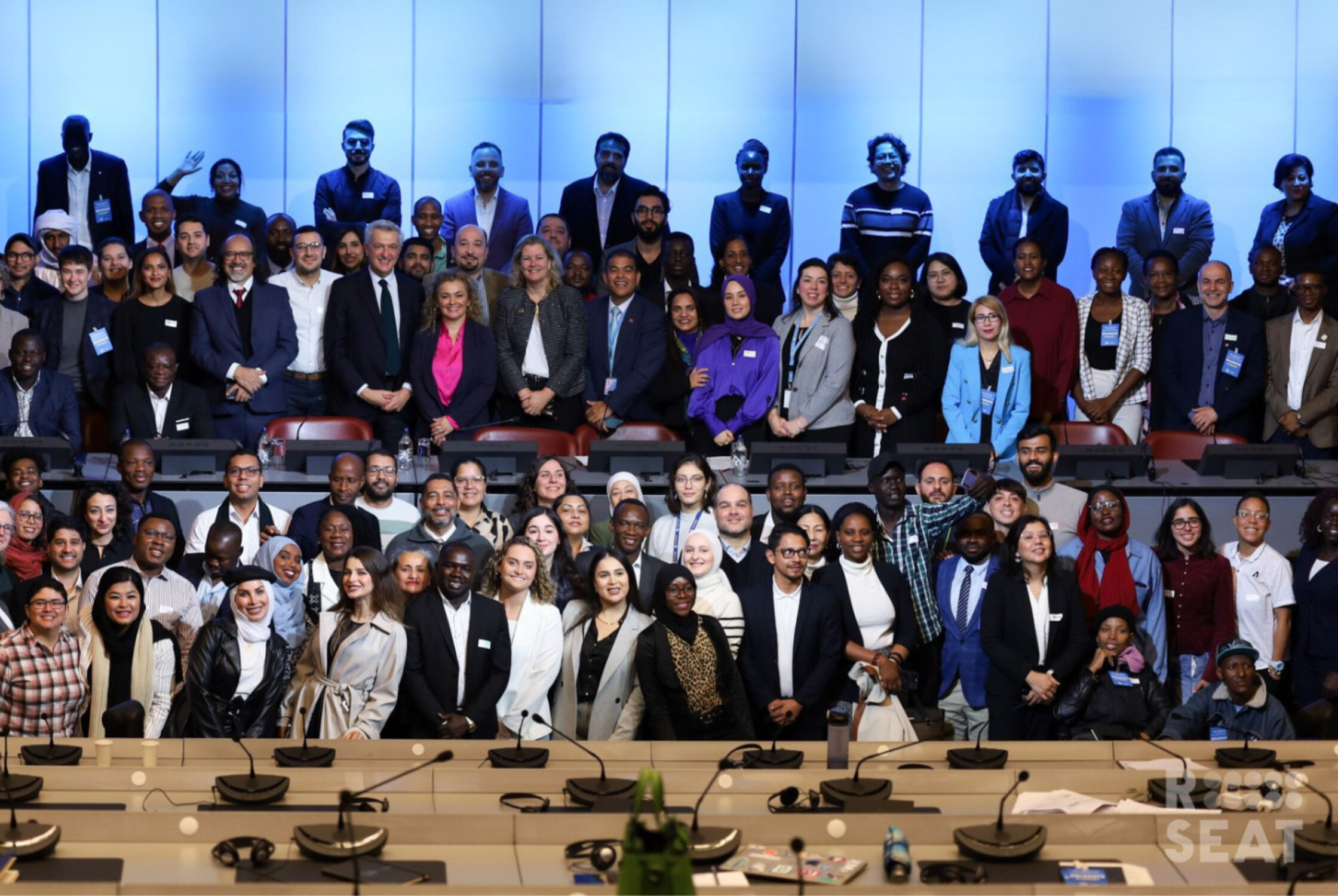
Featured Image: Refugee leaders at the 2023 Global Refugee Forum (GRF) in Geneva, Switzerland. Photo credit: R-SEAT.