Aid and Accountability for Sudanese Refugees in Chad
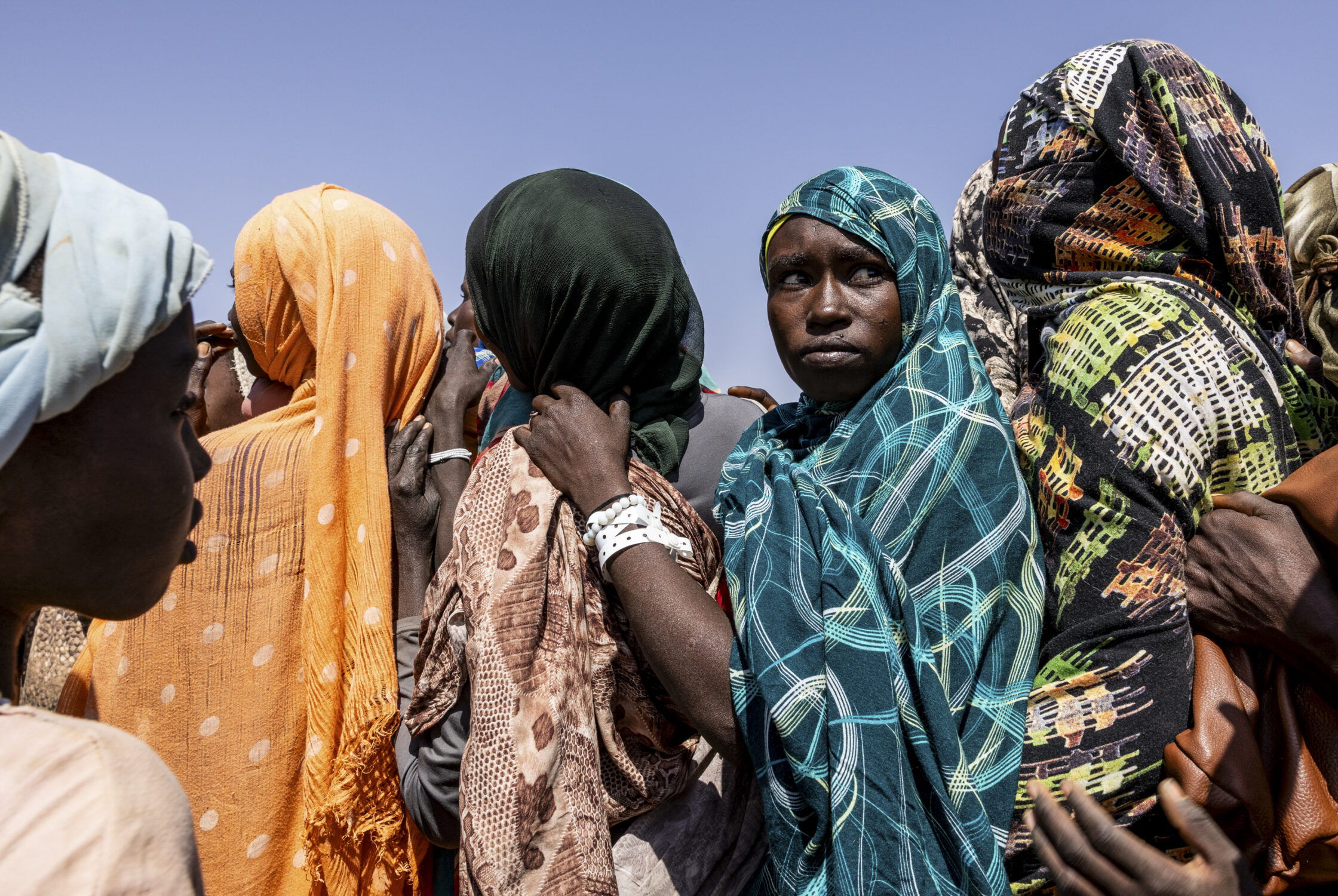
The city of El Fasher, the capital of North Darfur, fell on October 26, 2025, after an 18-month siege.
The Rapid Support Forces (RSF) takeover of the city continued a familiar pattern in the Sudan war: targeted killings, widespread sexual violence, and the forced displacement of civilians on a large scale. Many who escaped did not reach safety directly. They fled into a corridor of predation—RSF checkpoints that operated as toll booths and interrogation sites, where families were shaken down for cash and gold, men and boys were separated, and women were assaulted. In December 2025, Refugees International traveled to eastern Chad and interviewed recent arrivals from El Fasher and surrounding areas. Their testimonies describe a system, not a set of isolated crimes: extortion as a method of control, violence as a deterrent, and rape as a weapon of war.
Across the border, the suffering continues in a different form. Eastern Chad is absorbing a surge of traumatized survivors into a response already stretched thin—and now contracting under steep reductions in donor funding. Food, shelter, and basic health services are scarce. Protection programming is even thinner, precisely when survivors of sexual violence need confidential care, safe spaces, case management, and medical referral pathways. The result is a second crisis layered atop the first: people who survived Darfur are being left without the minimum support needed to recover, and families are being pushed toward dangerous onward movement because the camps do not feel survivable.
Relief and accountability must move together. Donor governments, including the United States and the European Union, should urgently and fully fund the 2026 Chad Humanitarian Response Plan and the Sudan Regional Refugee Response Plans, and press for sustained, unimpeded cross-border humanitarian access to Sudan. External actors enabling the atrocities must also be held accountable. The United Arab Emirates (UAE) has supplied the weapons that the RSF is using to carry out its massacres. The United States and other countries must press the UAE and other actors to stop enabling atrocities and to use their leverage with the warring parties to allow aid access and to stop the fighting. Finally, donors must also support investigations, including those by the International Criminal Court (ICC) and the UN Independent International Fact-Finding Mission for Sudan. These measures will help ensure the response’s effectiveness and demonstrate accountability for the crisis.
Atrocities in Darfur and the Humanitarian Consequences Inside Sudan
Since the start of the Sudan conflict in mid-April 2023, various human rights organizations, UN agencies, several governments, and journalists have documented RSF and Sudanese Armed Forces (SAF) atrocities. Women have borne a disproportionate share of the harm, with sexual and gender-based violence used to terrorize communities, fracture families, and drive displacement. RSF’s capture of El Fasher—the last major city in Darfur that remained under SAF control—marked a brutal escalation.
In its takeover of El Fasher in late October 2025, the RSF utilized drone technology to target critical infrastructure, including the city’s electricity grid and water stations. These aerial strikes are often indiscriminate or premeditated against civilians, including high-casualty attacks on shelters and mosques, such as a September 2025 strike that killed 75 worshippers. Through persistent drone assaults with heavy artillery and a prolonged 18-month siege, the RSF effectively shattered the resistance of the SAF and allied joint forces to consolidate its control over the entire Darfur region.
UN experts have documented widespread and “sadistic” levels of sexual violence, including gang rape at gunpoint and the detention of women for days in abusive conditions. The violence in El Fasher echoes earlier RSF campaigns in Zamzam, El Geneina (late 2023), and Ardamata (November 2023), where thousands were reportedly killed and women subjected to systematic rape.
Refugees International’s December 2025 interviews with recent arrivals in Chad reveal a pattern of predation that began from the moment civilians fled. Survivors repeatedly described RSF checkpoints as extraction points and sites of terror. Families paid drivers, then paid again at roadblocks to escape, but still faced theft and violence. Fighters demanded cash, gold, and valuables, including family heirlooms. Those who could not pay were beaten, stripped, and humiliated. Several refugees reported that young men and boys were singled out—sometimes detained, sometimes prevented from leaving, and, in some cases, killed. The RSF has effectively monetized “passage” at every stage, forcing families into impossible choices, including splitting up, leaving a spouse behind, or taking riskier routes to avoid the worst checkpoints.
Individual testimonies1 underscore how these abuses play out in practice. Ikhlas Abd-Rahman Hajar Yusuf, 41, a former high school teacher with undergraduate and graduate degrees, said RSF stopped her at a roadblock and raped her repeatedly for eight days until friends paid for her release via mobile transfer. She described the additional cruelty of fighters tearing up her diplomas while ransacking her belongings. “I don’t have parents, I don’t have kids, and I have nothing to show for my education, since RSF tore my certificates,” she told Refugees International, sobbing. Mohamed Adam, 56, said RSF fighters shot and killed his 13-year-old daughter and his one-and-a-half-year-old son as the family fled; when he asked for their bodies, they threatened him. “One of the worst feelings is that I did not give my children the last rites,” he said.
Independent reporting has also raised grave concerns about systematic mass killing in the aftermath of the takeover. The Yale School of Public Health’s Humanitarian Research Lab (HRL) assessed, with a significant degree of confidence, that following the takeover of El Fasher, the RSF carried out widespread and systematic mass killing. HRL also reported indications that RSF forces sought to destroy evidence of their abuses. When the UN Resident Coordinator in Sudan, Denise Brown, visited El Fasher in late 2025, she and her team corroborated key elements of these findings, characterizing the city as a “crime scene,” “an epicentre of human suffering,” and “a ghost town.” Médecins Sans Frontières (MSF) was recently granted access to El Fasher, Sudan. They described massive destruction and few residents remaining. This is in stark contrast to the city’s former status as the regional capital.
On January 19, 2026, the Deputy Prosecutor of the International Criminal Court (ICC), Nazhat Shameem Khan, addressed the United Nations Security Council on the Situation in Darfur, Sudan. In her address, she said:
“The fall of El Fasher to the RSF has been accompanied by an organized, calculated campaign of the most profound suffering, targeting non-Arab communities in particular – rape, arbitrary detention, executions, mass graves, all perpetrated on a massive scale. Many of these crimes have been filmed and celebrated by those committing them.”
Within Darfur, these atrocities have accelerated displacement, shattered civilian protection, and further reduced access to basic services. As violence and predation spread across key routes and population centers, civilian movement is now governed by armed actors, extortion, and fear. The result is a rolling humanitarian catastrophe: families separated during flight, survivors of sexual violence without care, and communities pushed into repeated displacement with limited access to food, shelter, health services, or protection.
Eastern Chad: Conditions for Refugees and the Impact of Aid Cuts on Relief Efforts
RSF violations are unfolding amid steep reductions in Western donor funding. According to the Financial Tracking Service, U.S. humanitarian funding for Chad fell from approximately $338 million in 2024 to $112 million in 2025, a 66.86 percent decline. This funding gap directly results in reduced food support, thinner health coverage, and severe gaps in protection programming for survivors of sexual violence, leaving vulnerable populations without essential aid. One mother of eight, including an 18-month-old, told Refugees International that two days after their arrival, they had not had a proper meal. She gave the children only a cup of tea and some tomatoes she borrowed from her neighbours. Many mothers breastfeeding children were either born just before the conflict or after the outbreak of the conflict, and many of them did not have adequate food and nutrition. Several of them were crying when Refugees International visited their tents for interviews.
New arrivals described a lack of shelter options. Families crowded into shelters far too small for their size, and basic needs were going unmet. Refugees International met a family of 14 sharing a single 3-by-4-meter shelter. The mother reported that her youngest child was six months old and breastfeeding, and she did not know when the family would receive food again.
According to a UN Refugee Agency (UNHCR) November 2025 Chad assessment reviewed by Refugees International, UNHCR faces an immediate $7.2 million shortfall to deliver gender-based violence prevention and life-saving support to the most vulnerable populations. More than 190,000 women, girls, and at-risk individuals in the hardest-hit areas of Ouaddai were prioritized for these interventions, including safe spaces for women and girls (estimated at $60,000 for construction and equipping) and dignity kits for 90,000 women and girls aged 13 to 49 (estimated at $2.7 million).
Humanitarian staff told Refugees International that aid cuts have reduced the number of refugee GBV support liaisons in camps hosting at least 100,000 refugees, most of whom are women and girls.
Senior UNHCR officials, interviewed by Refugees International, described a rapidly narrowing planning horizon. One UNHCR officer noted that partners have been told that support will continue only through March 2026 unless new funding arrives—an abrupt shift from the annual commitments that previously ensured basic continuity. Another senior official described an 82 percent budget gap, forcing triage decisions that leave survivors without care and families without predictable assistance. Refugees said these cuts are compounding the losses they carried across the border.
On December 29, 2025, the U.S. Department of State and the United Nations Office for the Coordination of Humanitarian Affairs (OCHA) signed a Memorandum of Understanding (MOU) under which the United States committed $2 billion in humanitarian assistance for global relief programs. However, the $2 billion figure is low relative to the approximately $14 billion in U.S. funding for the UN humanitarian system as a whole in 2024. The recent announcement that $200 million of these funds will go to Sudan is a good start, but it still leaves significant gaps and remains far short of the $774.7 million the United States provided for Sudan in 2024. It is also critical that a substantial share of the $2 billion be allocated to address the significant gaps in basic humanitarian services for newly arrived refugees in Chad.
At a high-level donor conference the United States hosted in Washington, D.C. on February 3, 2026, the UAE pledged $500 million to bolster immediate relief efforts, emphasizing the need for targeted aid in famine-stricken sectors. Yet the UAE’s continued supply of weapons to the RSF will continue to undermine any aid and lead to further suffering. The United States reiterated its commitment to providing $200 million to strengthen the logistics of humanitarian corridors. These contributions are vital, but a funding gap remains.
The Need for Relief and Accountability
Immediate action is required to keep people alive in the Sudan–Chad corridor. Eastern Chad is absorbing a new wave of refugees fleeing RSF atrocities, but significant funding shortfalls are straining the response. Donors should act quickly to close the gap between the 2026 Chad Humanitarian Response Plan and the 2026 Sudan and Regional Refugee Response Plans, and ensure aid reaches civilians inside Sudan through sustained, unimpeded cross-border delivery. The Sudan Humanitarian Needs and Response Plan requires $2.9 billion.
Relief efforts must be combined with accountability. Survivors told Refugees International they want safety, but they also want the world to treat these crimes as prosecutable atrocities, not background violence. As one survivor put it after describing what she lost—family, security, and the life she had built: “I have nothing to show.” The sentiment underscores how urgently relief and justice must go hand in hand. Donor governments should reinforce evidence collection and credible justice pathways so that perpetrators—and those enabling them—face real consequences at the International Criminal Court (ICC).
European countries, especially the United Kingdom, a permanent member of the UN Security Council and a Penholder on Sudan, should take the lead in extending the mandate of the UN Fact-Finding Mission for Sudan. Ongoing support to the Mission is essential to document serious human rights abuses, such as mass killings and sexual violence in El Fasher and other regions. This documentation is vital for future prosecutions. While the ICC’s investigation is currently limited to crimes committed in Darfur since July 1, 2002, the UN Independent International Fact-Finding Mission (FFM) has covered the entire territory of Sudan since April 15, 2023, providing broader evidence for potential expansion of ICC or other investigations.
The European Union should also boost its technical and financial backing for the ICC. The ICC has already played an important part in recognizing war crimes and crimes against humanity in El Fasher. EU countries with universal jurisdiction laws should also start criminal investigations into RSF and SAF commanders and allied militia leaders who have assets or travel within their borders.
Accountability must also include consequences for the warring parties. To break the pattern of violence, the United States and the European Union need to apply coordinated, targeted economic pressure. The EU and the UK have recently expanded sanctions to include principal figures like Abdelrahim Hamdan Dagalo and Algoney Hamdan Dagalo, as well as companies linked to the RSF. The Council of the European Union now lists 18 individuals and eight entities, freezing their assets and banning their travel. However, the United States and the European Union have not remained consistent. For instance, the European Parliament recently passed a resolution condemning the war but omitted any reference to the UAE’s involvement, following significant lobbying by Emirati officials. Similarly, despite sanctioning senior RSF leaders, the United States continues to designate the UAE as a major defense partner and pursue trade deals – despite UN Panel of Experts reports detailing how Emirati networks transfer advanced weapons to the RSF in violation of sanctions.
Besides turning a blind eye to the UAE’s violations of the sanctions and continued support of RSF, in an unprecedented move on February 6, 2025, President Donald Trump signed an Executive Order 142032 declaring the ICC’s investigations into U.S. and Israeli personnel a “national emergency.” Under the premise that the court’s actions pose an “unusual and extraordinary threat” to American national security, the order authorizes the freezing of assets and the imposition of visa restrictions on top ICC officials, including Chief Prosecutor Karim Khan and various presiding judges. On August 20, 2025, the U.S. Department of State sanctioned two judges, Judge Kimberly Prost of Canada and Judge Nicolas Guillou of France, and two additional ICC prosecutors. The Order and the designation have had a profound and paralyzing impact on the ICC, leading to the personal financial disruption of top officials, the suspension of critical digital services by U.S. tech firms, and a significant chilling effect on international legal cooperation. The ICC Prosecutor, a British national, has reportedly had his “UK bank account frozen by NatWest and has been locked out of his Microsoft email account, cutting off access to critical case files and communications.” Due to U.S. sanctions imposed under Executive Order 14203, the Deputy Prosecutor was not granted a visa to travel to New York and therefore delivered her briefing on Darfur remotely from The Hague on January 19, 2026.
It is deeply inconsistent – not to mention abhorrent – for the U.S. to impose sanctions on the ICC while a close U.S. partner – the UAE – is continuing to funnel arms to the RSF in violation of the U.S.-backed arms embargo on Darfur. The action against the ICC actively impedes the cause of accountability and justice for the RSF’s crimes, even as active UAE support enables those crimes to continue. Unless the U.S. and EU move from passive observation to active enforcement and consequence-driven diplomacy that directly addresses these violations and removes sanctions that stymie the Court from performing its functions, the cycle of violence will likely continue.
Recommendations
To the United States and the European Union:
Humanitarian Funding and Access
- The U.S. Department of State should commit to match or exceed 2024 levels of U.S. humanitarian support for Sudan and Chad. Needs have grown dramatically over the past year, and the $200 million from the $2 billion committed to Sudan is a helpful down payment, but it still leaves significant gaps.
- Exert robust diplomatic pressure on all parties to the conflict, particularly the RSF and SAF, to ensure unhindered humanitarian access.
Enforce Accountability Mechanisms
- European countries, especially the United Kingdom, should support and renew the mandate of the UN Independent International Fact-Finding Mission for Sudan to ensure thorough documentation of atrocities for future International Criminal Court prosecution.
- The European Union should increase funding and other human rights and technical support to the International Criminal Court (ICC) to ensure that those committing the crimes in Darfur, the Kordofans, and other parts of Sudan will be held accountable.
- The United States and the European Union should impose targeted sanctions on RSF leaders and the companies that fund their operations, building on existing sanctions targeting Mohammad Hamdan Daglo Mousa (“Hemedti”) and RSF-owned companies.
- EU member states and other countries with universal jurisdiction laws should initiate criminal investigations into RSF commanders who travel abroad or hold assets within their territory.
- The United States must revoke Executive Order 14203 to end the national emergency designation against the ICC. Lifting these “terrorist-grade” sanctions is essential to restoring the personal financial stability of officials such as Chief Prosecutor Karim Khan and Judges Kimberly Prost and Nicolas Guillou, and to ensuring they can perform their duties—including briefings to the UN—without travel restrictions.
To the UN Security Council:
- Impose a nationwide arms embargo on Sudan, explicitly targeting drone technology and armored vehicles being supplied to the RSF.
- Expand the jurisdiction of the ICC to cover all of Sudan and consider establishing a separate international judicial mechanism to prosecute those responsible for atrocity crimes.
Endnotes
[1] Refugees International obtained individuals’ consent for their testimonies and real names to be used in the report.
[2] The Order authorizes aggressive financial sanctions and travel bans against International Criminal Court (ICC) officials, including Chief Prosecutor Karim Khan and prominent judges like Kimberly Prost. By freezing bank accounts and treating legal professionals like international terrorists, the order hobbles the Court’s work by cutting off its leadership from the global financial system and intimidating the staff required to conduct investigations. The reach of these sanctions also extends to civil society, targeting human rights groups such as Al-Haq and Addameer for their roles in providing evidence to the Court. This creates a chilling effect that effectively paralyzes the tribunal’s ability to function, as routine operations—from paying expert witnesses to securing field evidence—become a legal liability for any bank or organization involved.
Featured Image: A 26-year-old Sudanese refugee stands in line at a refugee camp in Chad on November 13, 2025. Photo by Joris Bolomey/AFP via Getty Images.