A Way Forward as Aid Cuts Threaten Progress for Refugee Integration in Kenya
Executive Summary
Amid a global rise in forced displacement and increasing hostility toward refugees by Western governments, record numbers of displaced people, and the protracted nature of displacement have rendered the traditional encampment model increasingly unsustainable. Kenya has emerged as a notable exception. It recently enacted a new refugee law that aims to pivot its national approach from a refugee encampment model toward much greater socio-economic integration of refugees. The new policy would transition camps into settlements by granting refugees the right to work, freedom of movement, and property ownership. Despite significant implementation challenges, this approach presents a promising opportunity to transform refugee policy for the better and serve as a potential model for reforms in other countries that host refugees.
However, recent aid cuts under President Donald Trump and Western European countries could impede progress and are directly harming the lives and livelihoods of refugees. The cuts will also undermine refugee-led organizations, which are critical to building a more effective and sustainable response.
Integrating refugees into host communities—as Kenya is seeking to do—offers a more viable and sustainable solution to the protracted refugee crisis. This shift is not only necessary because of the foreign aid cuts. It is also strategic – it is sustainable and gives refugees a sense of agency. The refugees will work and earn a living rather than relying on humanitarian aid, which is becoming increasingly scarce.
For decades, Kenya has been hosting at least 800,000 refugees from the Democratic Republic of Congo, South Sudan, and Somalia in its camps. The refugee camps, Kakuma and Dadaab, in Turkana and Garissa counties, resemble sprawling urban areas. Many refugees in these camps have lived there since the early 1990s – there are now third-generation refugees in Kenya. Before the policy shift, the Kenyan government viewed refugees principally through a security lens. It routinely threatened to close the refugee camps, claiming they were a hotbed of Al Shabaab, a Somalia-based militant group. The encampment model was becoming unsustainable for donors who fund the majority of care and maintenance programs, well before the recent foreign aid cuts.
The socio-economic inclusion of refugees into Kenya’s development agenda offers a triple benefit: it enhances refugee self-reliance, reduces aid dependency, and strengthens host communities economically. However, the regions hosting Kenya’s largest refugee camps—such as Garissa and Turkana—have long histories of economic marginalization in their own right, posing significant challenges to the success of this approach.
The impact of the U.S. funding cut, compounded by reductions from other donors, is immediate and severe. As the largest donor to Kenya’s refugee response, most U.S. support is allocated to essential services, such as food assistance. Other donors should urgently step in to fill the gap—especially for life-saving aid such as food and protection—to shield refugees from the adverse effects of the aid cuts. It is vital to support the success of these reforms, both for the Kenyan context and for the potential precedent this could set for other countries.
In the meantime, the World Bank should use the funds from the newly replenished Window for Host Communities and Refugees (WHR) to support Kenya’s implementation of the Refugee Act and the recently launched Shirika Plan. Funding shortfall at this critical juncture risks undermining a promising model for refugee response.
Simultaneously, the Bank and other actors should engage meaningfully with refugees in Kenya through Refugee-Led Organizations (RLOs). In an era of shrinking foreign assistance, engaging refugees meaningfully through these organizations is not only strategic but also the right thing to do. The sustainable implementation of Kenya’s refugee law will depend significantly on how refugees are included. RLOs must be recognized as central players in localized humanitarian action.
Recommendations
To the Kenyan Government:
- Develop detailed implementation guidelines for the Shirika Plan, including clear milestones, a comprehensive funding breakdown, and potential sources of financing. As currently drafted, the plan lacks sufficient detail to guide effective action on the ground.
- The Department of Refugee Service should work with RELON-Kenya, a national network of RLOs in Kenya, to ensure the meaningful inclusion of refugee-led organizations (RLOs) in all stages of the Shirika Plan, from co-creation to monitoring and evaluation. This includes formally integrating RLO leadership into the Shirika Plan coordination mechanism, which does not currently reference or include RLOs. The processes of RLO selection should reflect the countries refugees come from to ensure balance.
To the United States Government:
- Congress should direct the restoration of life-saving assistance for the humanitarian support it gives to Kenya for refugees.
To the UN Refugee Agency (UNHCR):
- The launch of the Shirika Plan marks a significant step in transferring some key functions to the Department of Refugee Services. To ensure a smooth transition, develop a comprehensive plan that involves the government of Kenya’s agencies, donors, humanitarian organizations, and refugee-led organizations.
- As Kenya implements the refugee law and its subsequent implementation plan amid the aid cuts, UNHCR should work with the Kenyan authorities to ensure that equity and protection underpin refugee integration into Kenyan government services, such as education, health, and employment systems.
- Establish a refugee advisory expert group, comprising representatives from refugee-led organizations, to collaborate with the Department of Refugee Services and the World Bank, ensuring that refugee voices are central to the implementation of the law and the Shirika Plan.
To Other Donors:
- Close the funding gaps necessary to implement the Shirika Plan, but ensure that all financial support is tied to the Department of Refugee Services’ development and adherence to specific, time-bound implementation milestones. This should include progress on implementing the Refugee Act, particularly the clear articulation and enforcement of refugees’ right to freedom of movement and issuance of work permits.
- Take a No-Regret Funding posture toward RLOs as part of the localization agenda because RLOs are cost-effective and can deliver on programs and projects. Funding RLOs will also enhance their meaningful engagement and inclusion.
To the World Bank:
- Utilize the newly refurbished Window for Host Communities and Refugees to help Kenya access concessional loans and grants, supporting its continued implementation of the refugee law. The funding should be contingent upon meeting specific milestones, such as the Kenyan authorities clarifying the freedom of movement, publishing the number of refugee work permits issued, and maintaining a positive posture towards refugees.
- Collaborate with UNHCR and the Department of Refugee Services to establish a comprehensive database on all refugee funding, including funds that pass through intermediaries, on publicly available platforms (such as the Financial Tracking Service (FTS) and the International Aid Transparency Initiative (IATI)). Additionally, require intermediaries to maintain their databases on publicly available platforms. A transparent funding database can also enhance the coordination and accountability of the funding system.
Methodology
This report is based on field interviews conducted by Refugees International in Kenya in February and March 2025. Refugees International interviewed refugees, leaders of refugee-led organizations, World Bank officials, UN representatives, representatives from humanitarian agencies, Kenyan authorities, and experts in refugee law, livelihoods, and urbanization in Nairobi and Mombasa. The report builds on two previous reports here and here.
Impacts of the Aid Cuts
Kenya disproportionately depends on foreign aid for its humanitarian response, particularly the refugee response. USAID funded over two-thirds of refugee food aid and 70 percent of education and protection. Cutting this aid abruptly with no transition or phase-out plan has had an immediate impact.
Even before the aid was cut, refugee response plans were underfunded. According to UNHCR, as of the end of 2024, the Kenya refugee response received only 52 percent of its required U.S. $166 million.
Therefore, cuts will exacerbate the already perilous humanitarian situation. Due to funding cuts, the World Food Programme (WFP) reduced the Minimum Food Basket Assistance by 40 percent for nearly 800,000 refugees. If the agency does not secure additional funding, the food rations are expected to decrease to as low as 20 percent in the coming months. Additionally, WFP will suspend cash transfers for refugees. Around 720,000 refugees supported by the WFP in Kenya will, starting in June, receive an in-kind food ration of just 28 percent, and all cash assistance will halt unless additional funding is received.
In March 2025, aid cuts sparked protests at the Kakuma refugee camp in Kenya, which escalated into clashes with police, resulting in injuries among both refugees and local officials. A refugee leader in Daadab interviewed by Refugees International said, “It is not like the conditions in Daadab are any better; it is just that it is relatively more straightforward to tar the refugees in Daadab with Al Shabaab and terrorism. As such, the refugees in Dadaab are enduring the impact of the cuts through silence.”
Some of the most serious consequences of the aid cuts will be the worsening of health outcomes over time. In an interview with Refugees International, a humanitarian worker explained that the cuts are having a cascading effect. Community health workers—often the first line of response—have been laid off due to a lack of funding. Without them, essential interventions are missed. In addition, a lactating mother who lacks critical nutrition is less likely to provide sufficient nourishment to her child, directly undermining the child’s health. The resulting malnutrition may not be immediately apparent, as it is typically measured through lagging indicators. Aid organizations are reallocating funds across different project budget lines and drawing from existing warehouse stockpiles. However, those budgets and supplies are finite, and the full impact of the cuts is likely to become evident as they run out.
One officer from a past recipient of USAID funding said that the uncertainty regarding the timeline of receiving the funds also impacts planning since the cut. At that time, they would have received a signal on whether they would be funded. However, due to the confusion, they are uncertain whether they will receive their next round of funding when the current grants expire.
The USAID cut comes against the background of other donors cutting official development assistance (ODA): the Dutch by 60 percent,1 a reduction of €1 billion from 2026 to 2030; the Finnish cut ODA by approximately 25 percent – implemented over 2024‑27; The Germans cut by 53 percent; and the UK will reduce aid spending to 0.3 percent of Gross National Income (GNI) in 2027 (the lowest level since 1999) to fund higher defence spending. Reducing the aid target to 0.3 percent of GNI would mean that the UK’s aid budget for 2027 would be around £9.2 billion. The effect of all the major donors cutting or reducing aid will cascade, and a complete picture of their impacts will emerge in the coming months and years, if the funding cuts are not reversed.
Health and Education
Considering that refugees will have to be included in the national hospital plan, the combination of aid cuts to the Kenyan authorities and humanitarian aid groups will mean that refugees will bear the consequences. U.S. funding heavily subsidizes Kenya’s essential medicines, diagnostics, and supplies. USAID’s Bureau of Humanitarian Assistance (BHA) provided nearly $1.3 billion in humanitarian support over the past 12 years. In 2024, Kenya received $359.2 million in humanitarian aid, with the United States being the largest donor, contributing $207 million (58.8 percent of the total). Out of an estimated $570 million needed annually to stock the country’s health facilities, roughly $180 million was provided by U.S. programs. The U.S. President’s Emergency Plan for AIDS Relief (PEPFAR) has played a significant role in Kenya’s HIV response, financing a substantial portion of the country’s HIV programs and contributing to a high treatment coverage rate. Specifically, PEPFAR has financed about 60 percent of Kenya’s HIV programs in recent years. This support has helped Kenya achieve an HIV treatment coverage of over 98 percent of adults by 2023, according to PEPFAR reports.
Appearing before the National Assembly Departmental Committee on Health, the Principal Secretary of the State Department for Medical Services, Harry Kachuwai Kimtai, stated that the Ministry is facing a deficit of at least $154 million.
Food aid and health are not the only aspects of the response whose immediate impact is already visible. An interviewee working with one of the donor countries supporting the Kenya Refugee response told Refugees International that the education of 150,000 refugee learners was also halted immediately after the abrupt loss of USAID funding for teachers, subsidized lunches, learning materials, and related costs.
Individuals and the Impact of Aid Cuts
The stories of individuals impacted by the aid cuts put the harms into stark relief. Refugees International collected some of these stories:
“HIAS Kenya has been providing mental health and financial support to a 15-year-old refugee child at risk from Rwanda and a survivor of sexual violence. The child has a medical condition that requires her to use a diaper and be fed through feeding tubes. She is under the care of her single mother. The mother has a long-term medical condition that requires her to visit the hospital three days a week. Due to the stop-work order of our PRM-funded program, we have been forced to terminate our mental health and financial support to them, leaving their case incomplete and leaving them at extreme risk of eviction, exploitation, and abuse. This reality has already caused a severe deterioration in their mental health as they feel abandoned, with their futures at risk.”
“A 31-year-old refugee from Burundi living in Kenya was enrolled in a vocational training course in plumbing and typically received monthly transport to school. He was supposed to finalize school in March and receive a toolkit and employment placement support. With the program’s end, he cannot complete his vocational training and will miss out on the business start-up toolkit for self-employment. This means he will not integrate into the community economically and will continue to depend on food aid or handouts to fend for his family.”
“A 40-year-old refugee from Rwanda living in Kenya has faced several incidents of sexual assault. She is HIV positive, and was recently diagnosed with post-traumatic stress disorder (PTSD). She received counseling and financial assistance to help her meet her basic needs. As a result of the ended program, Jeannette is not able to access medical care, she risks eviction, and will not be accessing counseling to help her cope with the trauma she has experienced.”
Shirika Plan
Despite the aid cut, Kenya launched the Shirika Plan on March 28, 2025, to complement the Refugee Act of 2021 and the Refugee (General) Regulations of 2024. At the subnational level, Kenya has crafted local integration initiatives, such as the Kalobeyei Integrated Socio-Economic Development Plan (KISEDP) and the Garissa Integrated Socio-Economic Development Plan (GISEDP), to integrate refugees into its County Integrated Development Plans. The launch of the Shirika Plan was a demonstration of political will at a time when the easy path was to stall, at the very least. President Ruto said during the Plan’s launch, “The Shirika Plan is our bold, homegrown solution which amplifies the African Union’s call for African solutions to not only Africa’s problems but also global challenges.”
The World Bank and UNHCR made significant contributions to the development of the Shirika Plan through technical and financial support. The Shirika Plan aims to integrate refugees into Kenya’s national service delivery systems, including education, WASH, health and nutrition, labor, and housing. It also seeks to establish a coordinated information management and sharing mechanism to reduce duplication and ensure a more harmonized response. However, the absence of a comprehensive refugee management policy remains a significant obstacle to achieving seamless coordination across Kenyan government ministries, departments, agencies, and humanitarian actors, particularly in the context of recent aid cuts. The lack of a refugee policy will make coordination difficult because refugee issues affect almost all government agencies and various pieces of legislation.
The plan is structured around six pillars: (1) systems building, (2) integrated service delivery, (3) human capital and skills development, (4) climate action and natural resource management, (5) sustainable economic growth, and (6) durable solutions with complementary pathways. Implementation is envisioned in three phases: transition (2024–2027), stabilization (2028–2031), and resilience (2032–2035).
The transitional phase will require significant investment. It includes a comprehensive review and reform of regulatory and policy frameworks, capacity-building across national and county government institutions, and systems-level implementation. According to government estimates, this phase alone will require $943 million.
An aid worker, interviewed by Refugees International, described this phase as akin to “developing the ‘software’ to operationalize Kenya’s refugee law.” However, developing the ‘hardware’ on which the software will run requires significant funding. One of the key shortcomings of the Shirika Plan is the lack of detailed programming beyond high-level objectives and associated cost estimates. However, the Department of Refugee Services recently informed Refugees International that cross-ministerial planning, including coordination mechanisms and funding strategies, is underway.
As highlighted in Refugees International’s March 2025 report, a significant gap in the Shirika Plan is the absence of detailed costing and implementation benchmarks. To support Kenya in advancing this ambitious reform, donors should link their funding to clearly defined and measurable milestones.
With major donors all cutting aid, the World Bank’s Window for Host Communities and Refugees becomes an essential tool. It cannot replace other sources of funding, but if leveraged judiciously, it can keep Kenya on the positive refugee policy path.
World Bank Window for Host Communities and Refugees (WHR)
The World Bank launched the $2 billion Regional Sub-Window for Refugees and Host Communities (RSW) under the International Development Association (IDA)18 in 2016. It was redesigned as the $2.2 billion Window for Host Communities and Refugees HR under IDA19 and continued under IDA20 with $2.4 billion available. IDA21 was replenished at the end of 2024. IDA21 has two differences from the previous windows; the previous WHR commits the recipient country to make “significant policy reforms.” Two, the refugee-hosting country was required to finance 10 percent of WHR projects with their performance-based allocation.
The World Bank, through its concessional financing, provides support to eligible host countries, enabling them to implement projects that promote refugee inclusion, economic development, and policy reforms that foster self-reliance. Countries are eligible for funding if they host refugees (at least 25,000 or 0.1 percent of the population), have an “adequate protection framework,” and have “a strategy or action plan… that describes the concrete steps, including possible policy reforms, that the country will undertake toward long-term development solutions that benefit refugees and host communities.” Financing from the refugee sub-window is provided on 100 percent grant terms for countries at high risk of debt distress, 50 percent in grants, and 50 percent in applicable credit terms for countries at moderate and low risk of debt distress.
Unlike a short-term humanitarian response, the Bank views urbanization as a sustainable long-term response to Kenya’s refugee situation. The Kenya Urban Support Program (KUSP2) is the primary vehicle for the Bank. KUSP2’s key component is support for transitioning refugee camps into integrated settlements. Under the program, Kenya secured $215 million through the window to bolster Primary Healthcare Services and Enhance Institutional Capacity. According to the World Bank, the money will be allocated towards projects providing “robust health services to address the needs of approximately 1.8 million host community members and 590,000 refugees” in Dadaab and Kakuma.
According to the Bank, the “camp model creates humanitarian aid-driven market distortions and parallel services, which would be more effectively and equitably managed and delivered through county and municipal systems and processes.” As a demonstration of how humanitarian aid distorts and fragments service delivery, for instance, Kakuma and Kalobeyei camps in Turkana are managed separately from the nearby Kakuma Town; similarly, the three camps (Dagahaley, Hagadera, and Ifo) that constitute the Dadaab Refugee Complex in Garissa are under a separate administration from Dadaab Town. “In Garissa, the combined population of the refugee camps and the urban center is 245,250 people, making it the sixth largest municipality in Kenya. Kakuma-Kalobeyei is “Turkana’s most prominent human settlement cluster and the second largest in North Rift, Kenya, after Eldoret Town.” However, most activities are centered around refugee camps, which are separate, parallel, and distinct from Eldoret.
To integrate service delivery, the Kenyan authorities have elevated Kakuma and Dadaab into municipalities with the help of the World Bank. The two municipalities have their boards. According to the World Bank, connecting the disparate service delivery systems through local governance and the administrative structures of the municipality promotes resilience, inclusion, and more effective and efficient service delivery.
Uganda provides a good example of service integration. In 2015, following conflicts in the DRC and South Sudan, there was an increase in refugees moving to Uganda. Humanitarian agencies scaled up the response, including water provision, to the surge in the refugee numbers. During the initial response, water was trucked at a considerable cost.
In 2018, UNHCR, the World Bank, and the Ugandan government integrated the disparate water systems in the refugee settlements into national water authorities, such as the National Water and Sewerage Corporation and umbrella authorities, to enable better coordination, standardization, and long-term sustainability of water services. User fees were introduced to ensure financial sustainability and equal access to water for both refugees and host communities.
The World Bank should utilize the newly replenished window to assist Kenya in accessing concessional loans and grants that support Kenya’s refugee policy. However, the Bank should make access to the window’s funding contingent on the Kenyan authorities meeting specific milestones to maintain momentum on the positive refugee posture. One of those milestones is the freedom of movement.
Under the refugee law, freedom of movement, which is central to realizing all the other rights, is circumscribed. The law refers to “designated” areas where refugees can have unrestricted movement, but these areas remain undefined. It is unclear whether that applies to the entire country, the subnational level, or the settlement areas. The Bank should collaborate with the Kenyan authorities to clearly define the designated areas, as realizing all rights depends on the freedom of movement.
Freedom of movement has direct implications for other rights, especially the right to work. The refugee camps are located in remote areas with limited work opportunities, which naturally compels the refugees to seek work elsewhere. This is particularly essential in light of the aid cuts. One refugee leader living in Nairobi, who spoke to Refugee International, said he is already witnessing refugees leaving the camps.
The Bank should collaborate with the Kenyan authorities to simplify the work permit application process and ensure that refugees are not classified under the expatriate category. Furthermore, the Bank should request that the Kenyan authorities publish the number of work permits issued to refugees. There is no publicly available data on the number of refugees who have received work permits. Furthermore, the Directorate of Immigration should simplify the application process for issuing work permits to enable refugees to navigate it more easily. For more details on this, read Refugee International’s previous report.
UNHCR and the World Bank
UNHCR was a key pillar in Kenya’s encampment policy, and it continues to play a critical role in the social and economic integration of refugees. However, the agency has been hit by aid cuts. It will have to reduce its personnel and services, which will impact its ability to deliver services to refugees. A refugee leader in Dadaab stated that the UNHCR’s presence in the camp has declined since the USAID cuts. Before the cuts, he said they had been in the camp for at least five days a week, and now they are only in the camp for three days a week. As UNHCR’s capacity declines, the Bank’s role is likely to expand. However, the Bank and UNHCR have different mandates, expertise, and approaches to refugee policy.
While the World Bank is technically well-equipped to help countries integrate refugees into national education, health, housing, and employment systems through concessional financing instruments, there are gaps in how the Bank approaches integration. Equity, which is fundamental for vulnerable and displaced people, is not the Bank’s best suit. The WHR helped refugees access work in Ethiopia by funding the Ethiopian Economic Opportunities Program.
Furthermore, due to its disposition, mandate, and practice, the Bank struggles to engage non-state actors, especially civil society organizations and refugee-led organizations (RLOs). The Bank primarily deals with the government. The UNHCR, while it also deals with the government, mainly focuses on assisting refugees and displaced people. The aid cut will exacerbate the World Bank–UNHCR mismatch even further, as UNHCR and other humanitarian agencies grapple with the foreign aid cuts, making the WHR even more crucial in ensuring that Kenya maintains its positive refugee policy posture, with refugees and their welfare at its core.
Despite the aid cut, the UNHCR should maintain and enhance policy dialogue, protection monitoring, and legal assistance for refugees. It should work with the Kenyan authorities, refugee leadership, and the World Bank to ensure refugee voices are represented at every level of the law’s implementation. The UNHCR should collaborate with the Kenyan government and the World Bank to establish a refugee-led expert or advisory group, in conjunction with refugees, as part of implementing the Shirika Plan. This will enable meaningful engagement through RLOs.
Power Shifting
A key resource for progress in Kenya’s new refugee approach must be refugees themselves and RLOs. According to a study on RLOs in East Africa, RLOs became prominent during the COVID-19 pandemic, when international organizations and UNHCR, primary front-facing organizations, faced challenges in directly engaging with communities. They stepped in to provide essential services, often filling gaps left by aid agencies and UNHCR. In Kenya, RLOs are crucial in addressing the needs of refugees in both urban and camp settings.
RLOs draw on deep community ties and cultural knowledge—including language proficiency—to deliver services tailored to the specific needs of their communities. Unlike international NGOs, RLOs are embedded within the communities they serve. In a study from Ukraine by Refugees International, “local intermediaries are delivering programming that is 15.5% more cost efficient than international intermediaries, leveraging significant resources critically needed for ongoing humanitarian and development needs.”
RLOs’ proximity allows them to respond quickly to urgent needs in areas where international NGO presence is limited, offering services such as informal vocational training and community-run schools. RLOs also bring a nuanced understanding of the challenges facing their communities. Additionally, their overhead costs are significantly lower than those of international NGOs. All these factors often lead to RLOs delivering better results in more targeted and cost-effective interventions.
Like COVID-19, the stop-work order wrought large-scale disruption of Kenya’s humanitarian and refugee response. However, during the COVID-19 pandemic, RLOs adjusted and became the first responders and the last-mile delivery system for aid to refugees on a limited budget. Now, with NGOs that fund them experiencing aid cuts, RLOs will lose even the limited funding they used to receive, as they encounter more demands for their services from refugees in need, because major NGOs are reducing their services.
Donor countries’ inflexible funding mechanisms and risk aversion have made them hesitant to fund RLOs directly. As a result, most RLO funding still comes through multiple intermediaries or is limited to private philanthropy. Furthermore, there is no publicly available database of who is funding which RLOs.
To address the shocks in the medium and near term, UNHCR and the World Bank should establish a database on all refugee funding, including money that passes through intermediaries, on publicly available platforms, and require intermediaries to do the same. A transparent funding database can also enhance the coordination and accountability of the funding system.
On their part, RLOs will need to be agile and nimble and raise funding outside the traditional funding spaces. For instance, Most RLOs, non-profits without sustainable funding, must address their current challenges and build guardrails for future programming and line of work. According to a Refugees International interview with a localization expert from an international NGO in Nairobi, some RLOs should adopt a for-profit model. In contrast, others should pivot to a social entrepreneurship model where they are engaged in profit-making activities rather than being entirely non-profit. As the law allows refugees to start a business, RLOs can engage in business activities while also maintaining a non-profit arm. A switch from purely non-profit to profit work will present challenges. However, in the long run, he said it will serve RLO’s mission better in the era of a humanitarian reset.
In Kenya, particularly in the wake of aid cuts by traditional donors, refugee-led organizations (RLOs) must take center stage in advancing the localization agenda. Government ministries, departments, and agencies should actively engage RLOs and refugee leaders in policy development and advocacy efforts. It is long overdue for governments, humanitarian actors, and donors to shift power to local actors and fully commit to accountability to affected populations (AAP2).
In his statement on February 20, 2025, Emergency Relief Coordinator Tom Fletcher said, “We will accelerate progress in giving more power and accountability to local partners (who are bearing the brunt of cuts), with humanitarian action much closer to the people we serve.” He called the current moment a defining moment for the humanitarian community, “as we face a profound crisis of legitimacy, morale, and funding.” Meeting this moment requires removing the barriers that prevent affected people from working at the center of the crisis.
To meaningfully engage RLOs, donors, Kenyan government agencies, and international organizations must involve them at every stage of the project cycle—from design to evaluation—rather than relegating them to minor subcontracting roles. This inclusive approach enables RLOs to contribute their expertise and share their lived experiences. Genuine partnerships should be fostered through capacity-building support and recognition of RLO leadership in addressing local challenges.
The Kenyan government and donors must move beyond rhetorical commitments and translate localization into concrete action. Donors and NGOs should adopt a “bottom-up” approach, forming consortia with RLOs, entering communities, and consulting with refugees to determine the types of programs they need. These relations should move beyond symbolic tokenization of the RLO, and ensure refugees, some of whom are skilled, are involved as the core part of the project. Rather than relying on top-down programming, this participatory model fosters a sense of ownership among refugees. With donor resources declining and the return of large-scale international aid uncertain, investing in locally led responses builds trust, enhances legitimacy, and aligns with the principles of the 2018 Global Compact on Refugees (GCR): “Responses are most effective when they actively and meaningfully engage those they are intended to protect and assist.”
However, an aid worker in Nairobi told Refugees International that one of the most significant gaps following the stop-work order has been the lack of communication, coordination, and leadership from humanitarian donors at the country level. While many donor organizations have come to terms with the reality that aid will no longer be forthcoming, they have failed to convey this to affected refugee communities.
This communication breakdown has contributed to growing frustration and confusion. Refugees, who continue to engage regularly with frontline aid workers, are left asking, “What comes next?” with no answers provided. In some cases, this has led to public protests outside the offices of cluster-led agencies, as refugees hold operational NGOs accountable due to unclear donor messaging. Sustained, transparent communication could have helped close this information gap and mitigate tensions on the ground.
Conclusion
Kenya’s passage of the Refugee Act and the launch of the Shirika Plan represent significant milestones, signaling a genuine political will to address the refugee situation more sustainably. Enabling refugees to work delivers a “triple win”: fostering refugee self-reliance, reducing long-term aid dependency, and contributing to the economic development of host communities.
However, the benefits of these reforms will take time to materialize, and the upfront costs are significant; the benefits come after the costs. Kenya’s current economic challenges, compounded by sharp reductions in foreign aid, are already affecting the daily lives and livelihoods of refugees. These pressures risk stalling the full implementation of the Refugee Act in the medium and long term.
At the same time, the aid cuts present an opportunity to reorient the humanitarian response by placing refugee-led organizations at the center of implementation. However, for this shift to be meaningful, the actions of donors and humanitarian agencies must align with their commitments to localization and accountability.
The time to act is now, given deep funding cuts and the risk of undermining a promising path forward.
Endnotes
[1] The government said it aims to cut the development aid budget by €300 million (U.S. $330 million) in 2025 and by €500 million in 2026. The budget cuts will total €2.4 billion by 2027. .https://www.reuters.com/world/europe/dutch-right-wing-government-cuts-development-aid-deficit-balloons-2024-09-17/
[2] AAP is a core principle in humanitarian work that emphasizes the need for aid organizations to be held accountable for their actions and decisions by the very people they are trying to help. It means organizations must take account of, give account to, and be held accountable by those they serve. This includes ensuring that affected communities are meaningfully involved in decision-making processes that directly impact their lives.
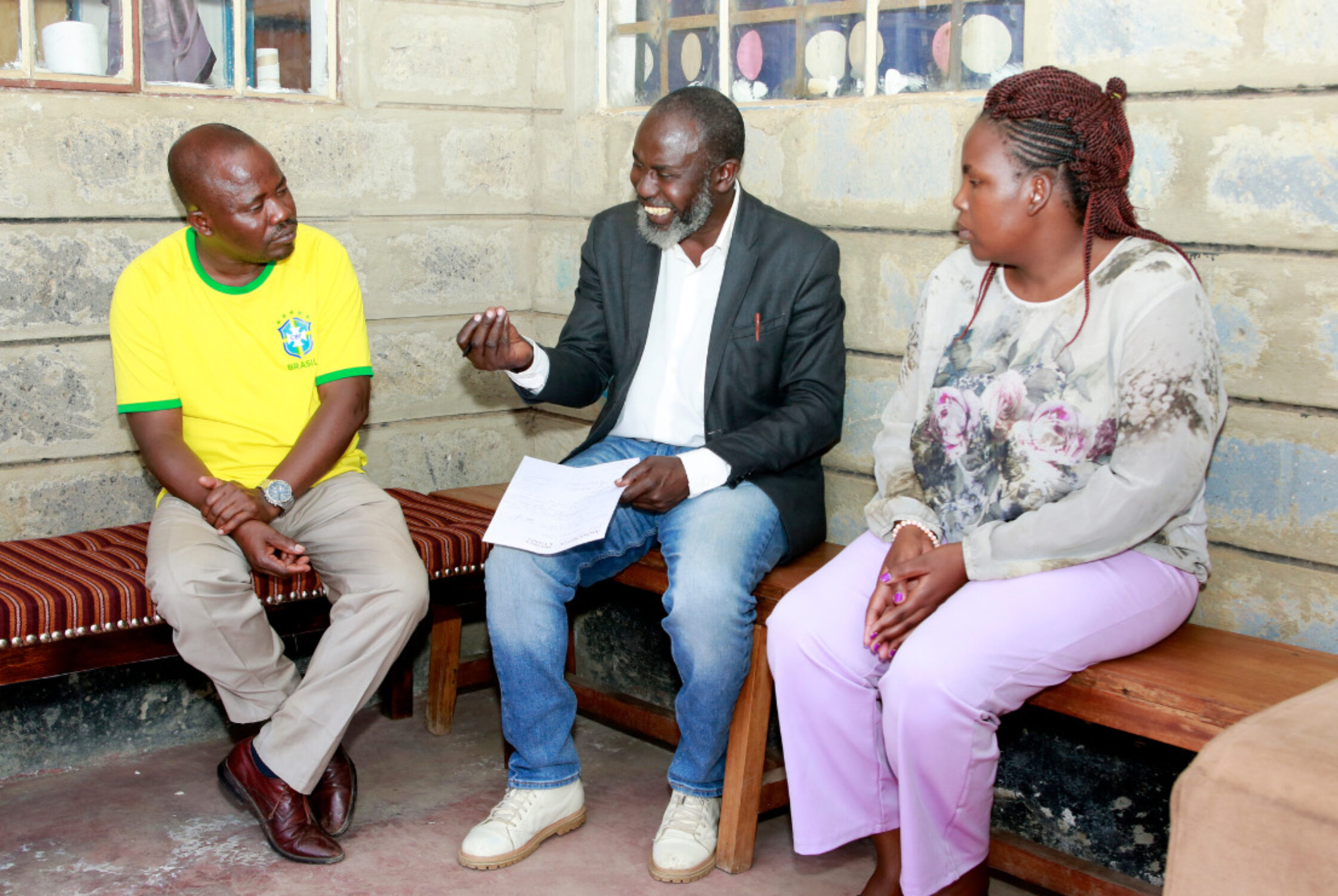
Featured Image: Staff from the Umoja Refugee Creative Centre, one of the many refugee-led organizations (RLOs) in Kenya that are stepping in to fill gaps amid massive humanitarian aid cuts. Photo Credit: Chitwa Joesph.