Six Months into Gaza Ceasefire, Setting the Record Straight About Aid
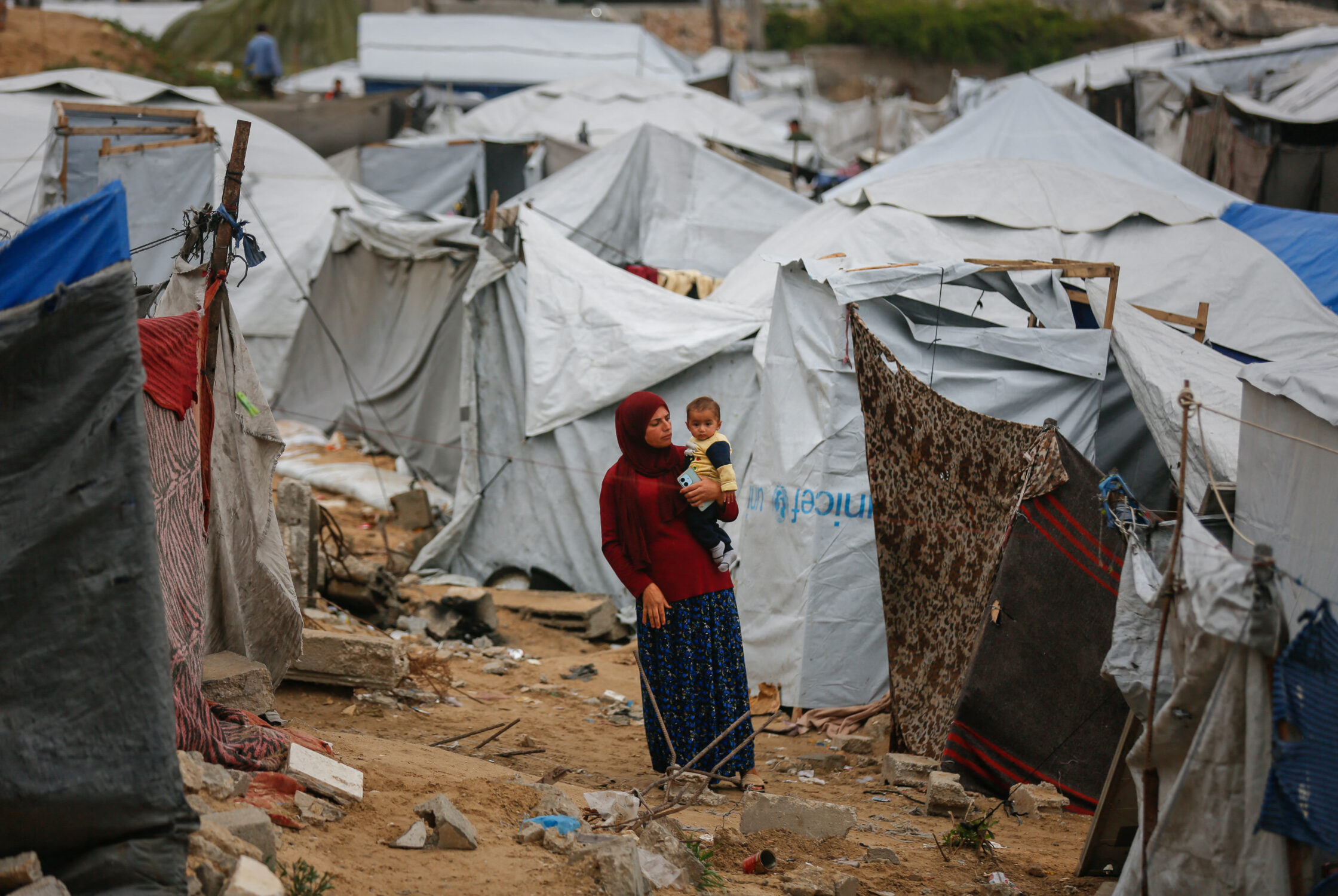
Six months after the ceasefire in Gaza, the humanitarian crisis has not stopped, and nearly 700 Palestinians have been killed.
Most people in Gaza still depend on limited humanitarian assistance. Disease outbreaks continue, and people are facing alarming levels of malnutrition. Vast areas remain in rubble. Many families still live in makeshift shelters, and essential infrastructure – from hospitals to schools – has been devastated.
Palestinians in Gaza are struggling to survive, much less recover.
At the same time, rampant mis- and disinformation about aid is clouding the response. Here are four common myths – and what the facts actually show.
Myth 1:
Israel is allowing enough humanitarian aid into Gaza. Aren’t 600 to 800 aid trucks entering Gaza every day?
Reality:
More humanitarian aid is urgently needed in Gaza.
Israeli officials say that approximately 600 to 800 aid trucks enter Gaza per day. However, most of these trucks are carrying commercial goods brought in by private traders – not humanitarian supplies. These goods are often too expensive for most people to buy and typically do not include critical items like medical supplies or other lifesaving goods.
The UN estimates that less than 20 percent of truck traffic into Gaza is carrying humanitarian aid. Refugees International and humanitarian partners estimate, based on UN figures, that only 110 trucks of UN-coordinated aid have entered Gaza on average per day. But even those numbers can be misleading. Trucks are counted when they enter Gaza – but seizures, delays, and restrictions often reduce what actually reaches people.
Instead of focusing on truck counts, the real question should be: Are people getting what they need to survive? Right now, the answer is no.
Almost the entire population of over 2 million people in Gaza require humanitarian assistance. The UN estimates that nearly 150,000 children need treatment for acute malnutrition, including tens of thousands suffering from wasting – a condition that significantly increases risk of death, disease, and life-long developmental problems in children. As water and sanitation systems remain devastated, hundreds of thousands of waterborne diseases have been reported, and infections like hepatitis A, scabies, and lice are rapidly spreading.
People are dying from preventable causes simply because they lack clean water. Gaza is not recovering – it is deteriorating.
Myth 2:
Israel’s restrictions on goods entering Gaza – often called “dual-use” restrictions – apply only to items that could be used as weapons.
Reality:
In practice, the system is far broader and far less transparent than that.
Israel maintains a classified list of items it considers “dual-use,” meaning they could theoretically have both civilian and military purposes. But the list is not publicly available, changes frequently, and is only shared selectively. Aid workers say this results in unpredictable and inconsistent enforcement that blocks many ordinary items needed for daily life. At different times, items as mundane as shampoo, fruit pits and diapers have reportedly been restricted.
Though Israel cites security concerns for these restrictions, the government allows private traders to bring in items listed as “dual-use” at a cost of tens of thousands of dollars in “fees” per truck.
As a result, Gaza faces severe shortages of equipment needed not just for recovery – but for basic survival, including water purification supplies, shelter materials, and basic hygiene products.
Myth 3:
So what if Israel banned NGOs from Gaza? NGOs only provide 1 percent of aid.
Reality:
Since March 2025, Israel has prohibited most international and local humanitarian organizations from bringing aid into Gaza, and has threatened to ban all operations for 37 NGOs.
The claim that NGOs provide only “1 percent” of aid is misleading. It measures the total volume of goods coordinated through the UN, rather than the life-saving services NGOs deliver on the ground. Because Israeli authorities have prevented many NGOs from bringing aid into Gaza for over a year, their share appears artificially low. Without these restrictions, their contribution would be significantly higher—a critical point often overlooked.
Even under severe restrictions, NGOs have remained critical. For example, Médecins Sans Frontières (MSF) alone provides clean water to roughly a quarter of Gaza’s population – a vital lifeline after the collapse of water and sanitation systems. NGOs run most field hospitals and shelter activity.
Humanitarian aid is not just about how many trucks enter a territory. It is about the services that keep people alive when basic systems break down.
NGOs provide emergency medical care, treat malnutrition, support mental health, and deliver targeted assistance to the most vulnerable, including pregnant women, malnourished children, and families living in makeshift shelters.
Restrictions on NGO access do more than limit aid – they also remove some of the few independent actors able to monitor conditions, uphold humanitarian standards, and bear witness to civilian suffering.
Myth 4:
Commercial goods are just as good as aid delivered by the UN and humanitarian organizations.
Reality:
Commercial goods and humanitarian aid serve very different purposes. One is driven by profit, and the other is designed to save lives.
What Gaza urgently needs are medical supplies, therapeutic nutrition for malnourished children, water and sanitation equipment, and materials to repair homes and infrastructure.
The system governing commercial imports drives prices far beyond what most families can afford. Israel tightly controls which traders are authorized to import goods, meaning there is little competition. Traders also report paying massive “coordination fees” – sometimes tens to hundreds of thousands of dollars per truck – to move goods through the system. Those costs ultimately get passed on to ordinary people. By the time these goods reach Gaza, many are cost prohibitive for a population facing an 80 percent unemployment rate. For families living on survival-level incomes, this makes even basic food unaffordable.
Aid delivered by the United Nations and humanitarian organizations includes accountability rules, quality standards, and systems designed to reach the most vulnerable. Commercial supply chains do not. Goods on store shelves are not a substitute for humanitarian aid.
Six months into the ceasefire in Gaza, the facts are clear: Gaza’s humanitarian crisis is far from over, and people need significantly more humanitarian assistance to move from survival to recovery.
Featured Image: A woman hugs her child among the tents at a makeshift camp for displaced Palestinians in the Gaza Strip, on April 1, 2026. Photo by Saeed Jaras/ Middle East Images/AFP via Getty Images.