Humanitarian and Displacement Implications of the U.S./Israel-Iran War
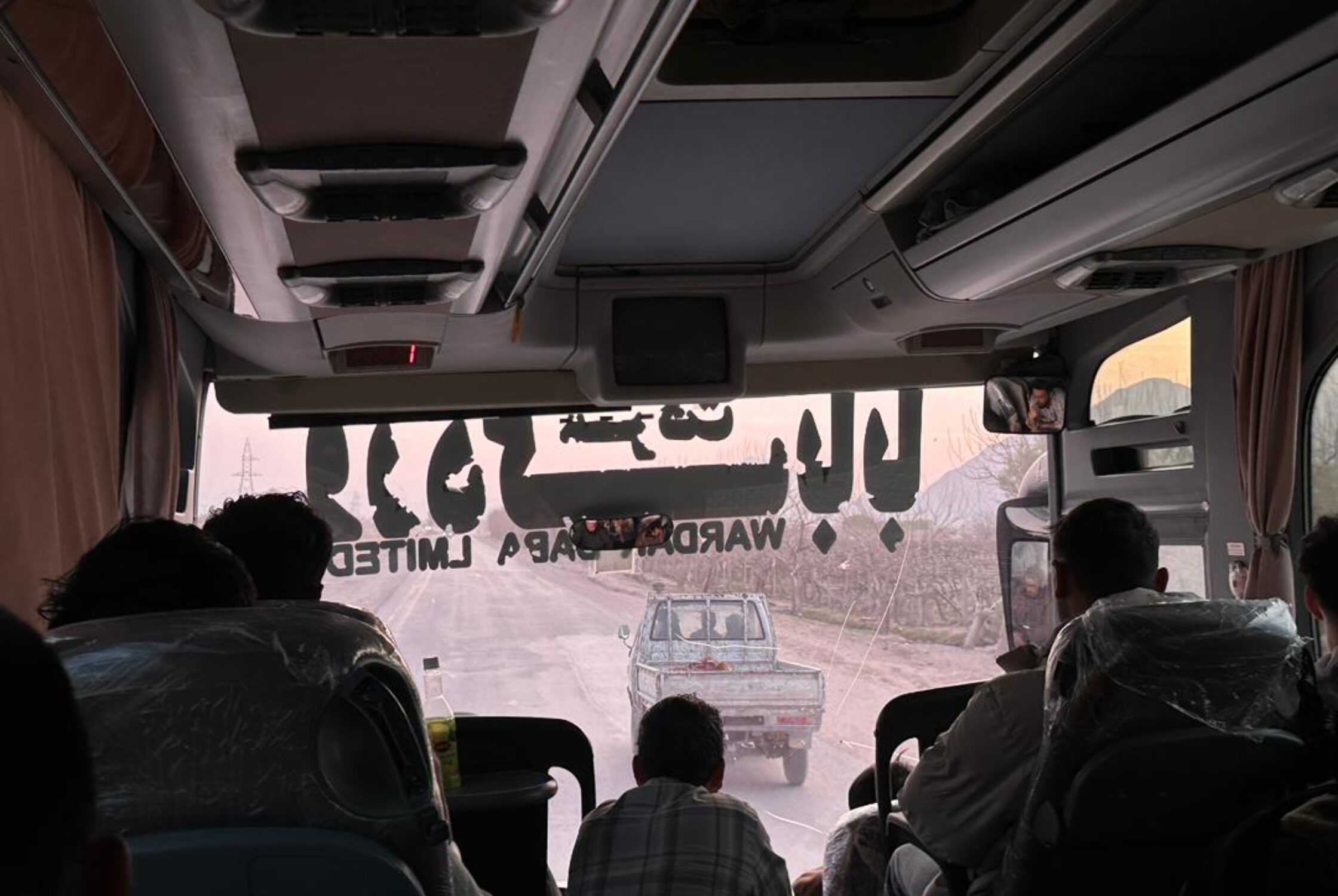
As tensions involving Iran raise the risk of a wider regional war, the humanitarian consequences for civilians and displaced populations could be profound. Conflict could trigger new displacement across the Middle East, worsen conditions for refugees already living in fragile environments, and divert global attention from other major humanitarian crises.
This event explored the potential humanitarian and displacement implications of a U.S./Israel–Iran conflict. Speakers examined how escalation could affect civilians across the Middle East, assessed the risks facing refugees in Iran and neighboring countries, and weighed the challenges humanitarian agencies may face responding to new displacement in an increasingly volatile environment – all while drawing attention and resources away from ongoing emergencies globally.
Moderator:
Hardin Lang, Vice President for Programs and Policy, Refugees International
Speakers:
Natasha Hall, Senior Advocate for the Middle East, Refugees International
Priyali Sur, Senior Fellow, Refugees International
Abdullahi Boru Halakhe, Senior Advocate for East and Southern Africa
Event Transcript
Hardin Lang
00:00:05-00:00:48: Thank you for joining us for today’s discussion on Iran. I’m Hardin Lang, Vice President for Programs and policy at Refugees International. Events are moving very quickly in the region. And as the offensive against Iran continues to unfold, much of the public debate has focused on military strategy and regional security. But our focus today is going to be on the people who are likely to bear the cost of this war. What does the war’s escalation mean for civilians inside Iran and across the region? And what will the impact be in terms of forced displacement and refugee flows more broadly? How will the global humanitarian system and industry be able to respond? These issues have not really received the kind of attention they deserve. But luckily today we have a terrific panel who’s going to join us to help us unpack them?
00:00:49-00:01:30: Natasha Hall is senior advocate for the Middle East at Refugees International, who served as a senior fellow at CSIS and worked with the White Helmets in Syria. Priyali Sur is a senior fellow at Refugees International. She has extensive experience working in Afghanistan as both a journalist and advocate. She has studied the impact of humanitarian crises and displacement on women and girls in the region and beyond. We will also hear from an Afghan refugee who has been recently forced back from Iran, and who will be sharing her firsthand experience and perspective via recording to protect her identity. And finally, Abdullahi Halakhe is senior advocate for East and Southern Africa at RI. He’s just returned from the Horn and will outline the ripple effects of the crisis beyond the Middle East.
00:01:31-00:02:36: Before I turn to them in a moment, I want to offer a few quick framing thoughts. The United States and Israel have launched a war against Iran with a very familiar promise that military action will be short, clean, and ultimately stabilizing. Events of the past few weeks have been anything but. The administration can’t articulate what it aims to achieve, and the conflict has quickly spread. The potential humanitarian fallout of a widening war is breathtaking, and the challenge can be framed across five key dimensions. First, this war is already taking a significant toll on civilians. We are seeing mounting reports of civilian deaths, including children, along with damage to schools, medical facilities and other civilian infrastructure. The strike on the girls’ school in Minab is one especially horrifying example, but it’s not the only one. International humanitarian law and civilian protection has to be at the center of any serious assessment of this war. And already the signs are disturbing. Second, a bigger danger may lie in what happens if the campaign seriously degrades the Iranian state. The theory of the case seems to be that military pressure can weaken the regime and produce a better outcome.
00:02:37-00:03:47: But in the region we’ve seen again and again that when outside powers hollow out state institutions, we don’t get an orderly political transition. The result is more often fractured authority, insecurity, and the breakdown of systems people depend on to survive. In Iran, that could mean failing public services, a security vacuum, and openings for armed separatists to exploit a population already under tremendous economic strain. That is a recipe for a much larger humanitarian emergency. Third, the displacement risks are enormous. Iran is a country of roughly 90 million people. And already 3.2 million Iranians have been forced from their homes by the fighting. This is not only about the Iranians. The country hosts millions of Afghan refugees and others who are already deeply vulnerable. So a crisis inside Iran could create large displacement with Iranians fleeing and refugees pushed over borders and back towards danger. Fourth, the war is already widening across the region. We’re seeing new fronts open, including in Lebanon, where hundreds of thousands have already been forced from their homes. The region is already burdened by repeated cycles of war, and too many communities have already been displaced multiple times.
00:03:48-00:04:23: The fear now is that escalation in Iran can create cover for other regional actors to pursue their own aims through military means with destabilizing consequences. Finally, the consequences could extend far beyond the Middle East. The conflict is already affecting global oil prices, shipping routes, and fertilizer markets. These dynamics quickly translate into higher food prices and weaker aid delivery.
They put more pressure on fragile countries far from the media theater of war. And this is happening in a moment where the humanitarian system has already been badly weakened by the dismantlement of USAID. In other words, this is a crisis arriving in a moment of maximum vulnerability.
00:04:24-00:04:43: So catastrophe is not inevitable. But the real concern is that Washington does not appear to have fully grappled with the scale of the risks. There is little sign of meaningful planning for mass displacement or humanitarian spillover, and that should worry all of us because the conflict continues to widen. It could come to be remembered as the beginning of a generational crisis.
00:04:43:08-00:04:58:01: Natasha, let me turn to you first. You have been working on the Middle East and in crisis zones for the better part of two decades. First, walk us through the humanitarian fallout inside of Iran and then the region, and which other conflicts are being overlooked as global attention shifts.
Natasha Hall
00:04:58-00:05:35: Thank you, Hardin, for that introduction. And the question, which I think is an excellent one, is, unfortunately, not being asked very much in DC. I’m going to just try to keep my comments brief even though I think the catastrophe that we see playing out warrants a full day of discussion. I’m just going to slowly pull away at the layers of the onion.
00:05:36-00:06:23: I’ll start with Iran, the core of this conflict, which has been hit thousands of times in the past two weeks. Israel and the United States have struck civilian targets as you noted, including a school where at least 160 people were killed, mostly little girls. Now mistakes happen, and they have happened. The United States hit an MSF hospital in Afghanistan in 2015, but that initiated a set of additional guardrails for the U.S. military in the aftermath on the rules of engagement, and targeting. We’re probably going to see more of these incidents as this war drags on, and they are far more likely when the guardrails on the rules of engagement have been taken off, as this administration has done over the past year.
00:06:24-00:07:06: Unfortunately, years of lessons from wars in the Middle East have essentially been thrown out. I worked on civilian harm mitigation. That’s what it’s called to mitigate civilian harm during times of war. And I’ve worked on that for a long time. And the military requested these kinds of trainings. They weren’t trying to avoid them because they understood the operational perils of not taking precautions. So predictable structural failure will follow when these safeguards are ignored. We’ve also seen a desalination plant hit that was providing water to about 30 villages, in the south.
00:07:07-00:08:44: But the constant bombardment has also affected Iranians. Particularly some volleys this week, which hit oil depots, and close to roads affecting people trying to flee to safer areas. On the morning of March 8th, Tehran woke up to black rain because of these oil depot strikes, which set fires that set a toxic plume across the city, a city of 10 million people. These black plumes were reported miles from the immediate blast site. Residents were told to stay indoors, turn on the AC. We know that the health effects of this are respiratory distress, possibly over the long term cancer causing, but also, critically, it could pollute Iran’s already depleted water supplies.
00:07:59-00:08:45: Even Senator Lindsey Graham has warned that this is counterproductive if regime change is the goal. Whoever emerges from this conflict will have to rebuild from nothing if this kind of targeting continues apace. And again, this is why civilian harm mitigation was asked for. It turns out that razing everything to the ground if you want something better in the aftermath is a bad idea. And it’s very expensive. So Israel might be indifferent. As evidenced by its mow the lawn strategy, which has been apparently taken to the entire region. But the rest of the region, Europe, and the United States, cannot be indifferent to this. The collapse of services and bombing at this scale will rival any displacement crisis seen in recent years.
00:08:45-00:10:10: Iran’s population, relatively, is more than twice the size of Iraq, four times the size of Syria (when the war started there), and 13 times the size of Libya. We’ve already seen millions of people displaced in just two weeks. A huge percentage of that has been in Lebanon, where nearly 800,000 people have been internally displaced and nearly 100,000 (possibly more today) have headed into fragile Syria. People are sleeping on the streets, in their cars, and in nearly 600 overcrowded shelters, where they haven’t been able to bathe or shower in the past week. Schools have been closed to accommodate the displaced. And we’ve seen about 600 people killed, probably more this morning, including 84 children. And we know that these numbers will rise. Israeli officials are now suggesting that they will turn Beirut’s suburbs into Khan Younis, referring to how Gaza was leveled. The World Health Organization has recorded 25 attacks on health care since February 28th (when this war started) resulting in 16 deaths and many injuries for humanitarian aid workers.
00:10:11-00:11:03: Hardin mentioned the aid cuts, but it’s also really difficult to reach parts of south Lebanon, the Bekaa Valley and the southern suburbs because they remain active conflict zones. Roads are also blocked by debris and unexploded ordnance from this war and past wars. And we’ve seen over 50 medical centers closed, just due to the conflict itself. And it increasingly appears that Israel has expansive plans for this very tiny population. Yet the displacement numbers that I’m talking about are already about a fifth of Lebanon’s population. So just try to understand that order of magnitude for the United States or any other country. We’re in the shadow of the Iran war and few actors seem willing to stop Israel. Syria is also watching closely and has already begun sending troops towards its border areas.
00:11:03-00:11:17: This is often what happens when the world’s attention shifts to a new war. And this is the reason we’re gathered today: for me and my colleagues, Abdullahi and Priyali, to talk about the forgotten wars.
00:11:17-00:11:47: Other crises don’t pause; they only deepen. And on the very day that the Iran war began, Israel began to close every crossing to Gaza until further notice. Officials claim that Gaza had sufficient resources, a statement that rings pretty hollow, given that Gaza is a wasteland and has never gotten enough humanitarian aid. Organizations warned that they would run out of food by the end of last week. And so under this pressure, Kerem Shalom was partially opened under very strict restrictions. But the other routes for medical evacuations, etc. remain essentially closed. UNICEF is reporting that food and cleaning supplies have risen something like 200 to 300% in days. Flour, cooking oil, canned goods have absolutely vanished from shelves in certain parts of Gaza City. Hospitals are rationing fuel, and water production is restricted. The IPC assessed that Gaza was no longer in famine conditions at the end of last year but the WFP is now warning that these fragile gains could unravel within days.
00:12:30-00:12:57: And then meanwhile, in the West Bank, settlers are carrying out an average of ten attacks per day on Palestinian civilians since February 28th. Six civilians have been killed. Water pipelines have been destroyed, leaving communities without access and increasing displacement in that area as well. Residents are terrified, because they know that the world’s attention is elsewhere.
00:12:58-00:14:04: And speaking of a war, under cover of war, I just want to touch on Ukraine because I’ve received a lot of questions about it. Much has been made of Russia’s role in assisting Iran. For now, that support is limited to targeting advice, as we’ve seen. But the broader consequences are felt in Ukraine. The shock to oil markets and energy supplies benefits Russia in the short term, of course. It makes it easier for them to sell oil at a much higher price. But Ukraine is also extremely vulnerable right now to aerial attacks. And this was underscored last Saturday when Russia launched 450 drone strikes and 19 missile strikes on Kharkiv, killing at least ten people. The missile strikes are reaching their highest intensity in four years. Because each Patriot battery deployed to protect Gulf cities is one less available to defend Ukraine. And every interceptor used over Riyadh or of Derby is one fewer to counter the next Russian attack on Ukraine’s power grid.
00:14:05-00:14:48: And then meanwhile, U.S. aid funding is depleted. Tom Fletcher, the ERC, has recently noted that humanitarian aid is exposed to the same shocks as everyone else. So global shipping costs are up 16% from last year, and the U.N. anticipates six month delays in delivering supplies across multiple crisis responses. So I’ve just barely started peeling away the layers of this onion. But if you aren’t crying yet, you aren’t paying attention. And I haven’t even gotten into the other countries that we’re going to discuss today. So thank you.
Hardin Lang
00:14:48-00:15:09: Thanks, Natasha. I appreciate that. I mean, in particularly trying to come to grips and understand what the ripple effects are going to be on food security systems, markets, and fertilizers. It’s impact on the global humanitarian system writ large is going to be quite significant or has the potential to be, depending on the director of the conflict. Anything else to offer on that point?
Natasha Hall
00:15:09-00:15:42: This is a big issue and maybe the longer lasting issue. You know, no man is an island. There’s a reason that we say it all the time. Because the energy, food, and water systems of the world are deeply interconnected. And what happens over there doesn’t stay over there. So I’m going to tackle each of these effects before getting to the humanitarian consequences, which are potentially enormous and worldwide. And I think my colleagues will speak more specifically to East Africa, Afghanistan, and Pakistan.
00:15:43-00:17:13: The Strait of Hormuz, just to put this in context, is a very narrow body of water, and it’s even narrower for the shipping lanes that go in and out. This is where 20% of the globe’s oil comes from, 20% of global liquefied natural gas, 20 to 30%, as you were mentioning, of global fertilizer exports. And by March 6th, traffic was described as virtually non-existent, with many ships rerouting around the Cape of Good Hope. In ten days, the world went from a significant oil surplus to a supply deficit, which is going to grow the longer that this goes on. And all of this, as I’m sure many people in the audience have noticed, has made global energy prices extremely volatile. We saw benchmark crude hit $120 a barrel before settling to 90. It soared over $100 earlier today. Qatar’s energy minister has said it could approach something close to $150 per barrel. Saudi Aramco’s CEO has warned that this is ‘catastrophic’. This is unlike anything we’ve ever seen. We’ve never seen the Strait of Hormuz closed like this, ever. So this is a very, very big deal. Countries, dependent on these exports, are now planning to tap into strategic reserves. For a variety of reasons, which I’m not going to get into, this is not going to be enough to account for the effective closure of this vital checkpoint.
00:17:13-00:17:53: Now, if the war continues for weeks, which as of this morning is feeling more likely, the consequences are going to compound fast. Iraq had only six days of oil storage on day one and has already cut production. Saudi Arabia has already cut output. Rerouting oil through a Red Sea is an alternative that can only handle maybe about one-third of the normal volume. Kuwait and the UAE have already cut production. Qatar announced a production halt at a facility last week and declared force majeure on liquified natural gas (LNG) shipments.
00:17:53-00:19:03: Now, I should note that liquified natural gas is a lot less elastic than oil. There’s fewer routes and places to get this, meaning it’s going to cause a major disruption. Europe and Asia are now going to be competing for those limited supplies. And to get to the fertilizer points that you were mentioning, liquefied natural gas affects fertilizer. As we know, the energy industry powers a lot. And part of that is fertilizer inputs. Urea production is heavily dependent on natural gas, particularly liquefied natural gas, which serves as a critical feedstock for nitrogen for fertilizer. And the Middle East powers roughly 40% of global urea exports and 20% of global ammonia, and nearly all of that transits through Hormuz. So in the first week of March, we saw urea and nitrogen fertilizer price spikes to nearly 30%. Qatar Energy had stopped production of urea and other downstream products. Now, to get to the larger impacts of this, India, Pakistan and Bangladesh have already been forced to roll back their own production. Four of Bangladesh’s five fertilizer factories are now closed.
00:19:04-00:19:55: And this really comes at the worst possible time. Spring planting in the Northern hemisphere. So this is also affecting farmers in the US and Brazil. They might have to plant less, which could reduce global crop yields. And the worst effects will hit countries already struggling with hunger, as I’m sure Abdullahi will get into. Places like Sudan, Somalia, Yemen, Afghanistan, and other Middle Eastern countries that rely on food imports. Food imports will also face shortages of energy problems and the energy deficit will, in turn, impact their food and water security because all these things are interconnected. I think the WFP deputy director recently put it very succinctly that there’s no margins left in many of these countries. And then, finally, just quickly, let me get to the direct effects on water, because I’m getting a lot of questions on this.
00:19:56-00:20:29: You know, we’ve seen strikes on desalination facilities in Bahrain and Iran, but there’s also been damage to desalination plants, as sort of casualties of war. These are just the risks. And the GCC is extremely at risk. The member states there account for about 60% of global desalination capacity. So we’re talking between 40 to nearly 100% of drinking water for some of these states is dependent on desalination plants.
00:20:31-0:21:15: We’ve also seen dams hit in other conflicts. If we see that in Iran, that’s really going to up the ante. But we are already seeing threats to limited resources, as I said, in the form of pollution. There’s a multitude of ways to affect water systems. And also, again, in terms of energy, energy is needed to treat water, to treat wastewater, to pump water. All of these things are going to affect the rest of the globe as well. And God knows, if something happens to Iran’s nuclear reactor, I think Gulf states are extremely worried about the contamination of Gulf water that millions rely on.
00:21:15-00:21:42: So I’ll leave it at that. But just to say that no matter how this conflict unfolds, these effects are going to reverberate. And lastly, Iran is surrounded by neighbors that are already under strain. As I mentioned, each week of war makes fertilizer shortages worse, displaces more people, and tightens the grip on nearly 318 million people that are already at risk of severe hunger worldwide.
Hardin Lang
00:21:42-00:22:00: Thanks, Natasha. Appreciate the time. Covered a lot there. And so let’s move and unpack a couple of particular components, because I think particularly your points about the impacts at the global level are quite significant and something that we’re going to be grappling with for a while, regardless of what happens in the time frame of this conflict.
00:22:01-00:22:23: Priyali, would you mind jumping in here? Natasha has now talked a lot about what’s happening in Iran and then moved sort of westward into Lebanon to look at the impacts there on the Gaza, etc. Look eastward, if you would, for us. And let’s look at what’s happening. What are the ripple effects and the potential impact both on Afghan refugees inside of Iran and then more broadly on the situation in Afghanistan, Iran’s neighbor.
Priyali Sur
00:22:23-00:23:07: Thanks, Hardin, and Natasha, thanks for putting it so, accurately and so succinctly in terms of the Middle East and the West Asia region. We clearly know now that when one country is attacked, the impacts are not just felt on that country, but all the neighboring areas, all the neighboring countries. And despite that, some authorities and regimes, some governments decide to go ahead. I’m trying to bring whatever I can to talk about the impact in terms of humanitarian aspects. I’ll be talking a little bit about the impact of the war in terms of the South Asia region and the Indo-Pacific region. And I think in that region, one of the most worst affected countries would be Afghanistan in terms of the impact of this war.
00:23:07-00:23:55: Why do I say that? Because let’s look at the impact in terms of three ‘falls’. The first one being, of course, the five years of the Taliban regime, which absolutely, completely, made life extremely challenging in Afghanistan. There’s been a severe economic crisis. I think the economy has shrunk by 30%. There have been 500,000 job losses, which has led to almost 75% of the population already facing food crises. Then comes this war, which is compounding all of this. So, trade across borders is going to be affected. There are going to be massive issues in terms of what kind of food supplies reach people. Natasha already mentioned this in terms of fertilizers, in terms of urea, in terms of energy.
00:23:55-00:25:20: On top of that, on the eastern side, Afghanistan is also facing a war with Pakistan. All border points with Pakistan have been shut. Afghanistan massively relies on Pakistan for food supplies. In terms of cooking oil, rice, fuel and other consumer goods, Afghanistan is facing an extreme shortage of food supplies, even from the eastern region. So they’re impacted internally because there’s been funding cuts. There have been job losses. There’s been an acute, economic crisis. They are impacted on the eastern border with the ongoing war with Pakistan, and now comes the war on the western border with Iran. But also in terms of what the Afghan population in Iran is going to face, right. So there’s a massive Afghan population that lives in Iran, which is close to 4 million. Some of them identify as refugees. Some of them identify as migrants. Since the 12 day war in Iran in 2025, we did see massive deportations of Afghan refugees, back to Afghanistan, from Iran. And so what we are hearing from the ground is that Iran is beginning to again try and push back Afghan refugees from Iran back to Afghanistan.
00:25:20-00:26:18: What would this mean in terms of the ongoing economic crisis in Afghanistan? Because Afghanistan relies deeply on the remittances that Afghan migrants and Afghan refugees living in Iran sent. I think it’s close to about 500 million annually to support their families back home in Afghanistan. And if Afghan migrants and Afghan refugees are pushed back or not able to work in Iran because of the ongoing war, what impact is this going to have on the Afghan population living in Afghanistan? But to add to that, in terms of the risks, the Afghan population or the Afghan refugee population in Iran has already, as always, felt like they live in a legal limbo. They feel discriminated against. They felt they have not been the priority in terms of safety and security. And when a war is ongoing, they worry that they’re not at the receiving end of any kind of aid, any kind of support.
00:26:18-00:26:53: In te few conversations I’ve had with Afghan refugees who are in Iran through intermittent internet connections because there was an internet blackout, they are facing massive shortages in terms of food expenses. Everything has become extremely expensive and they’re not able to access it. Plus, humanitarian assistance is very hard on the ground. They haven’t been reached by any kind of humanitarian organizations. So they haven’t really been able to access any kind of humanitarian support.
00:26:53-00:28:02: But that’s just looking at Afghanistan. How is this also going to impact the other countries further east? We can also look at the impact going on in countries like India. Countries like Bangladesh, which heavily depend on the LPG and the LNG, which comes, as Natasha initially said, through the Strait of Hormuz. Bangladesh has had to shut down all its universities. Now, what does that mean? Nobody at university level is able to access an education because of a war that one country decided to wage on another country in Iran. This completely impacts students and the youth population in Bangladesh. What has happened in India? Hotels and hospitals have completely cut out in terms of food supply. So patients in many hospitals will not be getting any kind of food while they are admitted. Because of LPG shortage and LNG shortage, many laborers have lost their livelihood. So I think the impacts are manifold. We’re not just seeing the impacts very limited to a certain area, as Natasha explained in the Middle East or West Asia, but also in the Far East and South Asia as well.
Hardin Lang
00:28:02-00:28:31: Priyali, that’s great. Thank you. You know, one of the things we spent a lot of time looking at in particular, the differentiated impacts of, humanitarian crises and, and conflict on women and girls in emergency. And I know you’ve been looking along with the rest of our team quite closely at that situation in Afghanistan. Any thoughts about how this conflict, could have a differentiated impact on those women and girls in a humanitarian emergency?
Priyali Sur
00:28:31-00:29:18: Yeah. So, again, through my conversations in the last week or ten days with Afghan refugee women in Iran, plus Iranian women. One thing, which they have constantly spoken about, is that this war has now limited us to basic survival. The whole idea of rights for women, liberation for women is out of context completely right now, because now they’re talking about just survival. I just briefly want to just go into the Azadi or the ‘Women Life Freedom’ movement, which was like this women’s lib movement. Nobody is going to be talking about that. It’s going to be completely about survival.
00:29:18-00:30:35: And so much so for the displaced Afghan refugee women there. If it’s hard for Iranian women, it’s 100 times harder for displaced women in Iran. I spoke to a couple of Afghan women who are in Iran. One of them said that for us, it means either going back to the repressive patriarchal regime of the Taliban in Afghanistan or being willing to die under a bomb in Iran. And some said we are willing to die under a bomb in Iran as opposed to go back to Taliban. And another said, we will go back to Afghanistan and that they have nowhere else to go.
We can play the testimony of a 23 year old Afghan student, a woman student who just four months ago moved from Afghanistan to Iran to pursue her dreams of journalism. And on the day the war started, her university asked her to leave, and she was pushed back to go and live under the Taliban regime in Afghanistan. So let’s play that.
Testimony from Afghan refugee who was forcibly returned from Iran to Afghanistan after war broke out
(00:30:35-00:35:51)
Maybe this story you heard sounds like a piece of news to you. But for me, it’s a life that I have lived and am telling.
I am a young woman who lived in Afghanistan for four years after the fall of Kabul. During those years, I continued my life under the Taliban government. I worked, I studied language on my own, I made films and I did photography. But after four years, it was no longer enough for me. I needed to start my university education. And becoming a journalist should not remain only a dream for me. I wanted to make more documentaries and films, and I needed to learn these skills better so I could tell a better story about Kabul and my country. So I decided to go to the only place that was available to me to continue my studies.
Exactly four months ago, I left Afghanistan for Iran. Despite many difficulties, I managed to start my first semester at university there as a refugee. My situation was already hard, but when I saw that I was treated differently because I was Afghan, it became twice as difficult. Other refugees from Arab countries or Türkiye were also there, but their situation was not as hard as mine. For four months I struggled with many problems and heavy expenses to continue my education. But in the first day of the war, the university told us they wouldn’t take responsibility for us and we had to return to our countries
It was Saturday morning. I woke up very early and went out for a short walk. On the way, I saw many people hurrying to work. Young men waiting for the university bus, and a young couple doing their morning exercise. I saw children going to school and I walked quickly among them, looking at everyone. I returned to the dormitory. I had breakfast, took a shower and was combing my hair in the yard when I suddenly heard a loud sound like a crash or an explosion. In the early days of the war, I was forced to return to Kabul, even though I had spent a lot of money to go there and was supposed to stay for four years.
An Afghan woman faces difficulties wherever she is. And in Iran, yes, life would have become even harder with war. As an Afghan refugee there, my safety was not a priority for anyone. Among all the refugees living in Iran, Afghans have never been a priority. I was someone who had escaped from war, but without realizing that I had fled from one war into another. Those days in Tehran felt strangely familiar to me. The sound of rockets and bombs, the chaos in the city. None of it felt new because I had already taste the bitterness of war. I felt complete hopelessness, and thought that wherever I went in the Middle East, I would not able to escape war.
Freedom for me simply means being able to breathe. To breathe in my own home, not in other foreign countries. Freedom means living as a free human being. It means no one telling me what to wear or where I can go. It means not being banned from university simply because I’m a woman.
My request to USA government, as a human being is this: Please end this war. In many cases, the United States does not suffer the same losses. But the people of the Middle East and Afghanistan pay the price. Today a young American can work, study, and live comfortably without knowing the stress of war. While their country’s policies have taken peace and stability away from millions of innocent people. People who have nothing to do with America but still become a victim of war. I am a 23 year old woman from Afghanistan who is trying her hardest just to live and to have the most ordinary life, but I have no power against governments. Meanwhile, a 23 year old girl in America maybe finished her last semester of college and is planning where to spend this summer with her friends, all while the decision made by her country have created some of the worst conditions for people like me.
I only want to work, study, and, at the end, have simple life as a normal human being. Is that really too much to ask?
Priyali Sur
00:35:51-00:36:14: I think the testimony is extremely important because as experts, we can just sit here and analyze the situation as much as we want to. But I think the grand perspective or the lived experience perspective is extremely important. We are very grateful to this 23 year old woman to courageously share this with us.
00:36:14-00:37:09: And I know she speaks about freedom in that testimony, but the irony and the sadness of this entire situation is that even though she wants to be free, she can’t even use her name for safety and security reasons to talk about what she really wants. So we’re just keeping all of that in mind. I just want to say that when we talk about food insecurity, when we talk about energy prices, when we talk about people having to move forcibly, people being displaced, what is most at risk are women and children along smuggling routes, illegal routes that will come up. Smugglers are going to be looking at hot to make most of these situations. And I think that’s why at this point, it’s important to look at countries like Turkey, Turkmenistan, Armenia, all of these regions where more and more women and girls, Afghan girls, displaced girls, Iranian women and girls may be smuggled and trafficked. Hardin, back to you.
Hardin Lang
00:37:09-00:37:33: Well, I thank you very much and thanks for bringing her voice to us. We really appreciate the opportunity to engage with folks who are directly on the ground and who are going through this right now. People have been really fantastic in the audience about engaging with the Q&A function. If you do have any questions, please drop them in there and we will do our level best to get to them when we get to the Q&A portion of the session.
00:37:33-00:37:44: Abdullahi, can I talk to you a little bit? You’re just back from the Horn of Africa as the war began to take place and unfold. How did it feel? And what were you seeing when you were there?
Abdullahi Boru Halakhe
00:37:44-00:38:15: Thank you so much, Hardin. I think there is no one region where the phrase‘geography is your destiny’ like the Horn of Africa is so apt. Here is a region that, you know, if you look at it from one side via the Indian Ocean, it links to the East Asia, and on the other side, via the Red Sea, it links to the Gulf countries, and all those are beginning to show. In the next few minutes, I would like to speak about three interlocking cascades that have made this region really difficult.
00:38:15-00:39:10: But before I do that, I want to make one thing very clear. Here is not a region, to use a basketball analogy, that is facing one bad quarter; here is a region that is facing multiple crises even before this conflict. 14 million Sudanese have been displaced, 26.4 million are facing acute food insecurity. And you have al-Shabab in Somalia growing in numbers in Ethiopia. What you see is a country that has lost 60% of its value of currency. And it’s also fighting six conflicts just inside, if you will. So what we are looking at is, is a country, is a region where the baseline for recovery is almost non-existent and fragility is maximum. So much so that the region cannot really absorb any external shocks.
00:39:10-00:39:47: Let me turn back now to the three things that I really would want to speak about and are showing up already, just a few weeks into the conflict. The United States vacuuming aid out of the system was really the beginning. The impact of that is already showing. The United States in this region is not just a donor among donors. It is load bearing the global humanitarian architecture, providing 42% of global financing. 86% of that is gone. And the immediate effect was very instantaneous.
00:39:47-00:40:29: You look at Sudan, where over 80% of soup kitchens are closed. In Ethiopia, you saw a country that lost almost 2 billion annually, the largest that external aid that that country receives. You speak about PEPFAR, you speak about the global fund. All that was very immediate. And the thing about US vacuuming aid in the system is that nobody’s lining up to support you for anything. You know, Germany has cut its aid. France has cut its aid. The UK has diverted its aid from the region. So all of these are beginning to show already.
00:40:29-00:41:18: The second issue is Djibouti on the container routes. That also has an impact on the fertilizer prices. When you speak about the Red Sea, we often use the word chokepoints. I think one of the things that we see is that Djibouti is not just a transit point for humanitarian and trade routes. For instance, 95% of Ethiopian imports go through the port of Djibouti. The World Food Program, over the last three years, has transported 65,000 metric tons through the port of Djibouti. That was the pre-positioning area for Somalia, Sudan, Yemen and Ethiopia. This is not just a port. This is a chokepoint for a lot of humanitarian support.
00:41:15-00:42:19: Closely aligned with that is the price of fertilizer. Just to give an example, when the war in Ukraine erupted, the price of fertilizer in Ethiopia went up by 200%. When you speak about the impact of fertilizers in this region, you’re now talking about a system that produces famine. It is a system that really makes production of anything very, very difficult. So the price of fertilizers goes up. What do people do? The people start cultivating fewer lands. Use fewer fertilizers. That begins showing in food insecurity. And for people who are not familiar with this region. This region is one rainfall away from falling into serious, serious food insecurity. And we’ve seen that in the 2011 famine in Somalia. We’ve got famine going on in Sudan right now. So I think the two linked together, and the impact of that is already showing.
00:42:20-00:43:10: The third issue that I want to speak about is the Gulf and remittances. Gulf countries have made the Horn of Africa ground zero of their rivalry, whether it’s Saudi Arabia supporting one group in Sudan and UAE supporting another group, or in Somalia or in Somaliland or Ethiopia for that matter. The Gulf, therefore, has not become a stable external stabilizer of the Horn. It has always been a source of the Horn’s instability, despite the fact that the Horn, already because of climate change produces more refugees as well as hosting more refugees. Proxy fighting between the Gulf countries is showing up in the region.
00:43:10-00:44:01: At the same time, the remittances that Somalia receives is in the region of 2 billion a year. It moves up and down, depending on the season. But that is more than the entire Somalian government budget. You got something like 7 to 8% of these remittances moving through hawala systems that are informal. So proxy retrenchment and remittance disruption are created by the same governments. One single family can simultaneously lose its territory, and also the stability that a cousin who lives and works in Dubai sends the money to their families to keep them alive.
00:44:01-00:44:48: The impact of the Gulf on this conflict and the role that the Gulf countries play are beginning to show. And I think the implication is going to take a very long time to clear. This is layering on top of multiple levels of crises in a region that is already facing significant levels of disruption from climate and weather. We are looking at food insecurity of over 20 million people in need of humanitarian aid in Sudan, but also something like 14 million people displaced, the largest displacement on the continent.
Hardin Lang
00:44:48-00:45:00: Abdullahi, thank you very much. That’s, it’s a pretty grim picture of what the potential ripple effects of this could be, across the Horn more broadly.
00:45:00-00:45:43: A couple other questions, but I do want to actually bring in some folks from the audience right now. We’ve had one question, a couple of questions on what would be the impact of the GCC as sources of funding for humanitarian assistance, in other parts of the Middle East. And then second, if we know anything more about the conditions of people who are displaced already inside of Iran and what are the kind of conditions that they’re going to be wrestling with? Natasha, make a turn to you first to tackle either of those two.
Natasha Hall
00:45:43-00:46:24: I think it remains to be seen how this will affect aid coming from the Gulf. The supply chains more generally have been disrupted, but Gulf states are actually probably better able than, you know, U.N. hubs in far flung places to to bring aid to people right now, too. But again, I think the energy shortfall is going to impact everything. Whether it’s across the street or it’s on the other side of the world. So, In terms of Iran, it is actually incredibly difficult to get information out. And I think we need to take everything with a grain of salt.
00:46:24-00:47:13: But in terms of casualty figures, even displacement figures, it’s not entirely clear, how many people have been internally displaced and how many people have fled across borders at this point in time. The numbers are probably far higher than even the millions that we’re seeing already, reported by UNHCR. But needless to say, as we know, this is an oppressive and restrictive regime. And as we know, oppressive and restrictive regimes don’t do well with INGOs and and with UN agencies. They see these people as potential observers of whatever the aftermath of this is and the crackdown that can come. On top of this, as we know, UNHCR has been slashed in terms of funding.
00:47:13-00:47:52: So even the minimal, minimal support and I mean minimal support they were giving to Afghan refugees, for example, in Iran. That is not enough to accommodate a population of 90 million people potentially. So this is a really dire situation. Azerbaijan has been trying to provide aid to people fleeing across the border. But if they get embroiled in this conflict, too, that’s 760km of border with Iran. We’re talking about a lot of knock on effects that can happen here. And the humanitarian response is just not poised to take this on at this time.
Hardin Lang
00:47:52-00:48:27: Natasha, thank you for that. And also to respond very quickly to one of the questions in the chat about whether or not there’s been any conversation about the U.S. or others beginning to pick up or open the door to Iranian refugees who may flee Iran. And so far, no. And what I would say and emphasize here is that, you know, in 2025 alone, the Trump administration basically refused or sent back forcibly, almost 200 Iranian refugees or people who were seeking asylum in the United States. So that track record doesn’t hold a lot of hope for those who were maybe affected by this conflict.
00:48:29-00:48:40: Priyali let me turn to you to say a little bit. There’s a couple of questions about the impact on Afghans in particular, and the kind of conditions they’re facing. Any more light that you can shed on, like the statistics around this?
Priyali Sur
00:48:40-00:49:11: Yeah. So as Natasha said, I think information from Iran is sporadic. When people get on the internet, they try and share information. But we don’t know of many humanitarian organizations actively working specifically to support the war affected people and also displaced people. So there hasn’t been specific aid that has reached, let’s say, refugees or displaced people living in Iran.
00:49:11-00:50:17: In terms of people being pushed back to countries like Afghanistan from Iran again, there hasn’t been, let’s say, a regime order that all Afghan refugees or Afghan migrants have to go back. Most offices are not working to process deportations right now. They are involved in dealing with the war is what I hear. But individual institutions have made individual decisions saying that they want all of the students to go back, or want all Afghan employees in the organization to go back. So I think there is no large blanket rule, but there are these individual decisions. And again, like food prices are high, refugees and displaced people are struggling to access any kind of dairy or meat products. But yeah, overall, no blanket rule. Not any specific support coming in for them. And people just trying to survive.
Hardin Lang
00:50:17-00:50:42: Thanks Priyali. Abdullahi, there’s a question in the chat asking you to look into your crystal ball, about how this may impact the humanitarian situation and the direction of the conflict in Sudan. You’ve already touched on that briefly in some of your framing remarks, but it may be interesting to sort of unpack more specifically some of the vectors that we’re seeing ripple out and how they may shape the humanitarian situation in Sudan.
Abdullahi Halakhe
00:50:42-00:51:34: Thank you so much. I think for Sudan, let’s just have some numbers. Sudan’s GDP is projected to contract by 42%. The Jazira region, which accounts for half of Sudan’s production, has systematically been plundered. State revenue collapsed about 80%. Both the SAF and the RSF are now self-financing. This is not a state requiring funding for reconstruction. The precondition that would enable rebuilding has been eviscerated. The key actors are driven by incentives from the war economy instead of commitments to state-building. 53% of children screened in North Darfur are acutely malnourished. Acute malnutrition in the first 1,000 days of life causes irreversible cognitive impairment.
00:51:34-00:52:48: The best case scenario is for the Gulf countries to really retrench, meaning they look inwards and deploy most of their resources alongside all the support that they are giving to their proxies. But we have to be very careful. UAE and Saudi Arabia had their own little beef over Yemen. But now because they are facing, a specific country, Iran, they have closed ranks. But I don’t think that will translate to the region. But what you would want to see is for that dynamic to translate to the region; for their proxies to be starved of unstinting support that they get in terms of the weapons, diplomatic cover, financing, banking and all that. Otherwise, I think you have aggressive actors that can stand up this war, but not for a very long time. I think we don’t have a clear answer, but the larger contour is that the situation will get a little bit worse before it gets better.
Hardin Lang
00:52:48-00:52:59: Thanks Abdullahi. Natasha, we’ve also had a question from the audience a little bit about AI and sovereignty, and, perhaps you might have a moment to sort of unpack that a bit.
Natasha Hall
00:52:59- 00:53:12: So there’s been a lot of reporting on AI being used in targeting, not just in the Minab school, but also in Gaza as well.
00:53:12-00:53:58: Just to answer it really succinctly, it looks like this was a tragic mistake and that this was an old target. And we’ve seen this happen even before AI had been used in targeting. This is just baked into the cost benefit analysis of war but nobody seemed to do a real risk matrix. War kills people. That’s just a fact of life. Regardless if you’re using AI or not. That said, I think the usage of AI in targeting obviously makes targeting easier. And provides a lot more targets. Using autonomous warfare also makes it easier for that party that’s using autonomous warfare to go to war.
00:53:58-00:54:24: The problem is, when the Trump administration and others are so far removed from the actual consequences of war that we are all talking about, that they think that the consequences are going to be easy to deal with, and that’s because they are removed from war. Very unlike my father, who was a Vietnam vet and very much in the trenches, we are moving very, very far away from the dirtiness of war. And that concerns me a lot because we don’t understand the ramifications.
00:54:24-00:55:07: In terms of state sovereignty and self-determination, the Iranian people are, for the most part, opposed to this regime. They have suffered from really devastating crackdowns just recently where thousands of people were killed. I worry a lot for the self-determination of Iranians and the freedom loving Iranians everywhere because I don’t think that this is going to get them there. I think that what this is going to do, is potentially either create greater instability in the near term that could increase suffering, or we’re going to see a huge crackdown when this is over, which is going to devastate Iranians.
00:55:07-00:55:34: And the notion that 4,000 Kurdish fighters in the north are going to somehow enter Tehran and overthrow the regime is bananas. To be very clear, we haven’t seen mass defections from the regime. I’m not going to put my think tank hat on too much. But I think we all hope for freedom as, as you’ve all said, for Iranians and for Afghans and everyone else. I just don’t know if this is the route to get there.
Hardin Lang
00:55:34:12-00:56:18: Great. Thank you very much. And then because you could easily see a consequence or a situation here where some of the state institutions are degraded. You may have folks that sort of take to the streets, or there may be separatist movements that are deciding to enter the fight, but we just don’t have any examples where that, in the region in particular, where that leads quickly to a more stabilizing situation or clear regime change. The regime is going to stick to this as long as they possibly can. And so what we’re potentially doing is opening up an episode that we’ve seen before in the Middle East on multiple occasions with extremely difficult and dire humanitarian projections coming out of that.
00:56:18-00:56:30: So thank you all very much. I know we’re coming close to the end of time here. Natasha, just for you very quickly. Do you have any other key points for our work on focusing on Iran at this stage?
Natasha Hall
00:56:30-00:56:51: Sure, really quickly, and I think this points to my last comment. One of the reasons we wanted to put on this event is that we don’t understand what the ripple effects of these wars are. I think clearly a proper risk matrix was not created. Right? And we are seeing massive risk.
00:56:51-00:57:40: We’re seeing the Strait of Hormuz, really officially closed, even though the U.S. has devastated the air defenses of Iran. What I have learned over a period of years, especially working on Syria, is that a regime whose raison d’être is survival is going to outlast us in a war of attrition. Russia has proven this in Ukraine. They are just going to wait us out. And in the meantime, it’s all of the people that we’ve been talking to. It’s all the places that we have been discussing that are going to feel the pain. But soon that pain will come to US shores, European shores. This isn’t going to be isolated to the Strait of Hormuz or to the Gulf, or even to Lebanon.
Hardin Lang
00:57:40- 00:58:17: Thank you, Natasha, and appreciate that. So sort of, summarizing a bit of what we’re hearing across all of the different panelists. One of the things that really stands out is that the humanitarian crisis in many ways is already here, even after just a couple of weeks of war, and not just in Iran, but what we’re seeing in Lebanon, obviously. But in what’s happening in Afghanistan as well, and the ripple effects there. And then, Abdullahi, looking at the impacts of the way things are playing out, across the Horn, we can already see that the cat is out of the bag in many places. And there’s really a question of, the longer this drags on, how much worse that can get.
00:58:17-00:58:59: There is some concern over what could happen if the Iranian state degrades significantly. I don’t think anyone is a proponent of this sort of regime staying in power. But the question is, how does it leave or how does it change? And if you’re in a place where that’s going to lead to a fracturing and disintegration of the state, potentially we’re not there but going in that general direction. That slide doesn’t hold out a whole lot of hope for the humanitarian conditions and even human rights of Iranian civilians. Also just a real emphasis and focus on the vulnerability of displaced in Iran or refugees in Iran and elsewhere.
00:58:59-00:59:54: There’s no one really looking out for these folks. And the humanitarian system is not poised at this moment of great global weakness to be able to respond to a crisis of this nature. So this is a big open question that we’re going to be dealing with, I think, for potentially months to come. And then also as we watch the spread. It’s moving in ways and spaces that we just can’t predict, right? We’re seeing things pop up in different places very quickly, much in the way in which the war has very quickly moved out of the control or the plan of the Department of Defense and Pete Hegseth. We are seeing where these sorts of consequences begin to see ripple across different locations. With respect to the humanitarian situation, the disruption on global markets and, particularly, inputs to humanitarian responses and food security are going to be felt for some time to come.
00:59:54-01:00:12: So thank you all very much for joining us. Panelists, we really appreciate you giving us your time. And to the audience, thank you so much for joining us today. And we will continue to engage on this issue and follow up with a whole series of different products to come. So continue to watch the space. And thank you very much.